DESCENT AND NAVIGATION: A REPORT IS NOT A DIAGNOSIS
The navigation overhaul did not silence criticism. V5ZEB reported difficulty slowing down on descent and suspected a drag issue. Others described satisfactory flights or questioned the path and use of drag devices. The initial report was itself uncertain whether the cause lay in the aircraft or simulator. That uncertainty should survive retelling: choosing a culprit would make the history more decisive than its evidence. [43, 21 October 2026; posts 8571–8573]
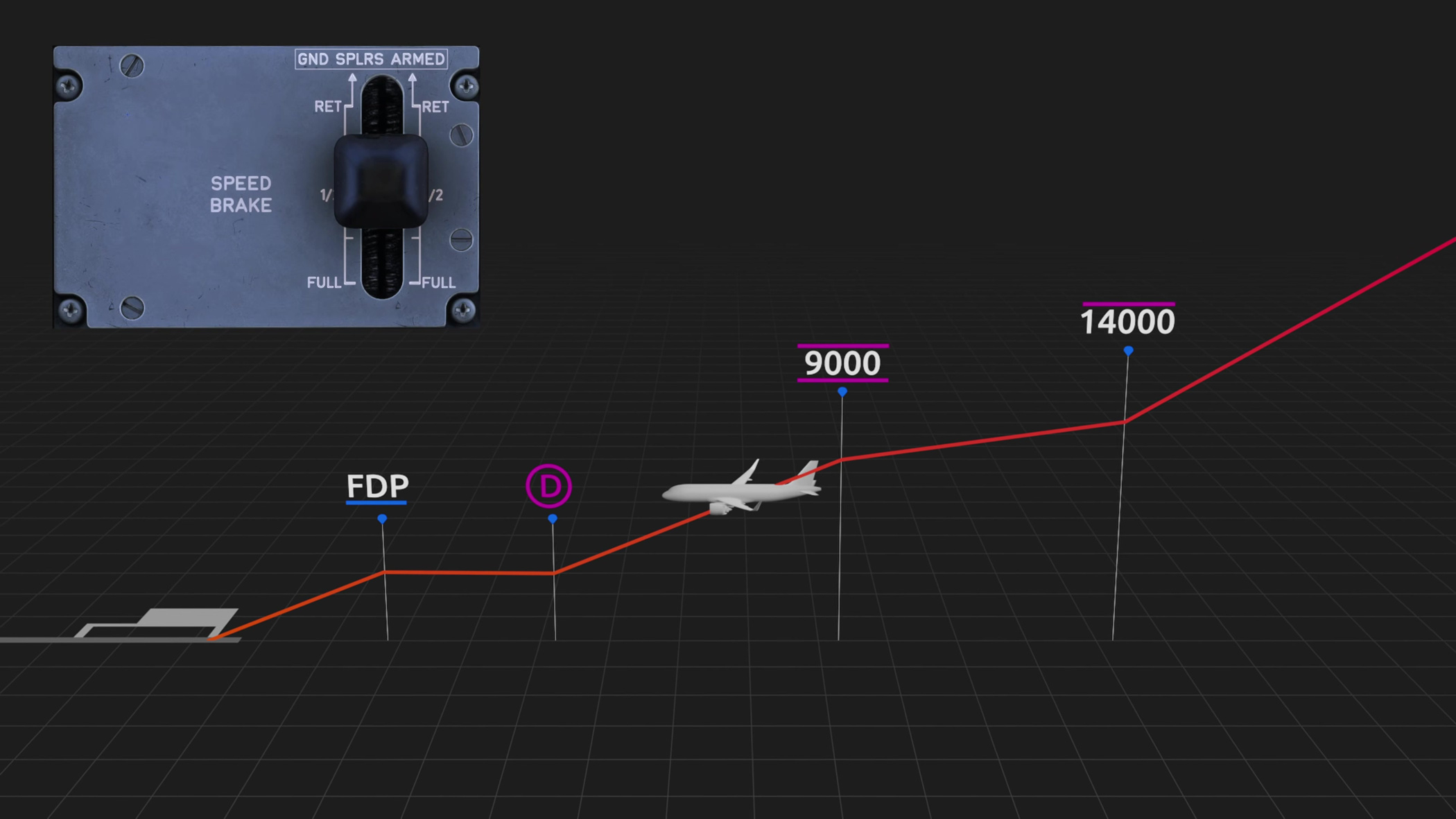
The presentation’s constrained-descent diagram includes the deceleration point, final descent point and a speedbrake-control inset. [1, Presentation chapter: LNAV/VNAV]
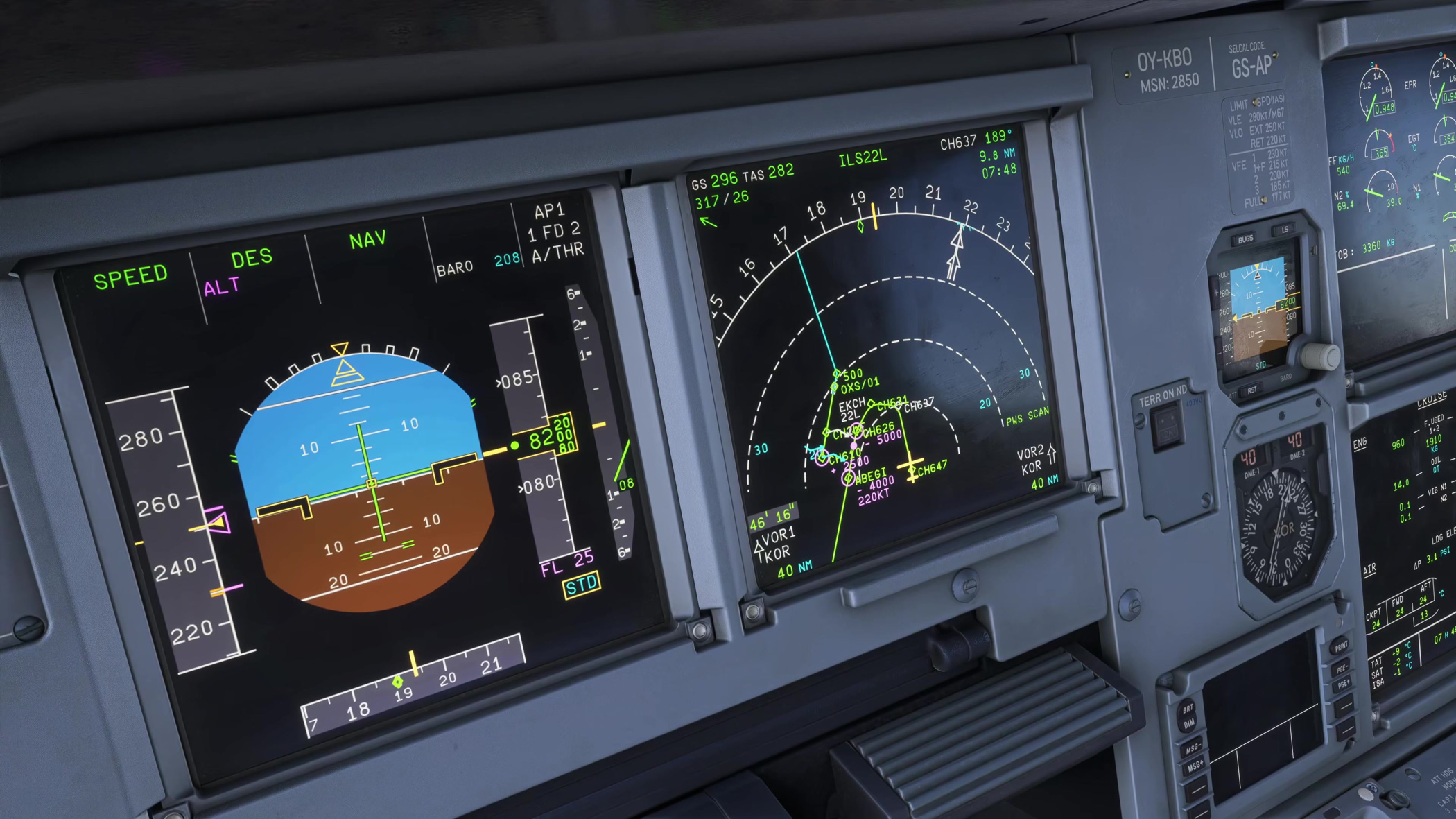
Managed-descent source example: SPEED / DES / NAV are active, with ALT armed. [1, Presentation chapter: LNAV/VNAV]
The discussion sharpened on 23 October when V5ZEB argued the descent profile remained wrong and challenged advice to descend earlier. TenPatrol disputed that reasoning and referred to Airbus guidance. Separately, cdv00079374 reported approach-revision and post-go-around behaviour that appeared incorrect. These specific allegations deserve preservation, but do not prove a general VNAV failure or a confirmed defect in every cited scenario. [45, Posts 8595 and 8607–8610; 22–23 October 2026]
In the Pro Companion, these observations belong in an attributed reception account and a register of cases worth reproducing. The flying chapters require current verified procedures. A forum explanation may be helpful, incomplete or mistaken; popularity does not decide which. Separating symptom, proposed cause and confirmed correction allows criticism to remain forceful without becoming misleading instruction.