HYDRAULIC GENERATION AND THE LIMITS OF PTU ASSISTANCE
Green, Blue and Yellow are separate fluid systems. Each has its own reservoir, and fluid is not exchanged by the PTU. Engine1 drives the normal Green pump, engine2 the normal Yellow pump, and an electric pump supports Blue. Yellow also has an electric pump and a manual cargo-door provision in the supplied architecture. The RAT supports Blue in the appropriate emergency condition. A pump can be commanded or available without the associated circuit having the pressure, fluid quantity and reservoir conditions required for its users. [71, PDF pp. 2–5]
The bidirectional PTU uses pressure energy from one of Green/Yellow to provide mechanical assistance to the other. It does not replenish a leaking reservoir, connect Blue or create an unlimited power source. A donor system must retain the capability to provide that assistance. This explains why a pressure difference can produce PTU activity during otherwise normal changes of engine/pump availability, and why continuous operation alongside a depleted or overheated system has a different significance. The sound identifies an event worth correlating with the hydraulic page, not a complete diagnosis. [71, PDF pp. 2, 8–9]
Reservoir quantity, reservoir air pressure, fluid temperature, pump state and system pressure must be read separately. A pump needs an adequate inlet environment, and the reservoir-pressurisation arrangement is linked to pneumatic supply. A low quantity trend may precede loss of pressure; preserved pressure does not prove that a leak has stopped. Conversely, a pressure loss can occur while quantity remains present. The hydraulic indications and cautions are designed to preserve these distinctions. Use the source diagram to identify the circuit involved before following the displayed failure procedure. [71, PDF pp. 5–6, 11–14] [67, PDF p. 2]
A hydraulic failure can change electrical generation through the emergency generator and change control-surface availability through its actuators. Those consequences depend on which system is lost and which alternate source remains. The older source’s normal-pressure and automatic-actuation thresholds describe its effectivity; they are not a set of universal Fenix trigger values. For a repeatable simulator exercise, identify the configured pump/steering standard, initial sources and selected failure, then compare quantity, pressure and affected users. That produces a mechanism-based account instead of treating every warning associated with hydraulics as equivalent. [71, PDF pp. 2–7, 11–14] [62, PDF p. 14]
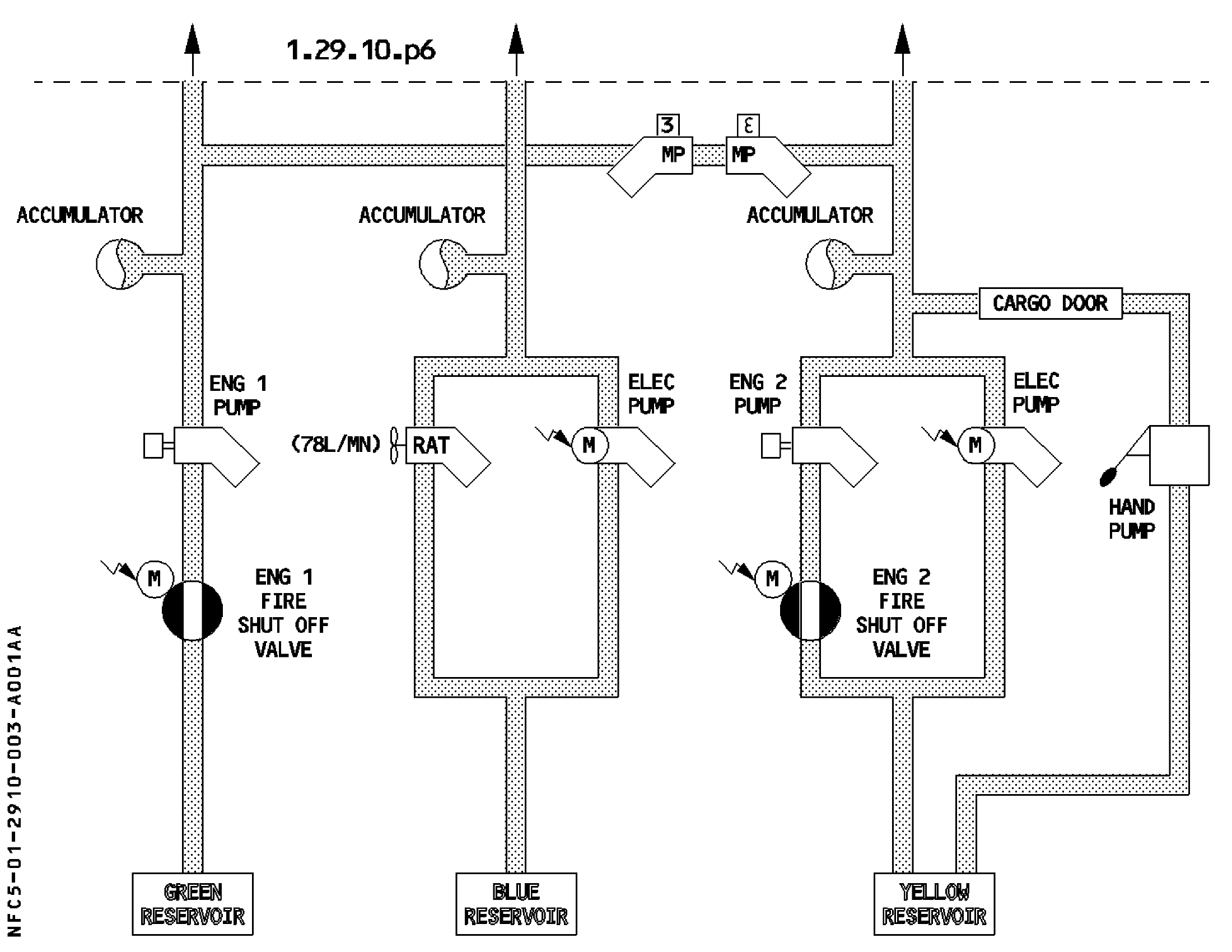
Green, Blue and Yellow hydraulic generation pumps. [71, PDF p. 4]