FUEL PREDICTIONS, RESERVES AND HOLDING TIME
Fuel prediction is a model of the remaining route, atmosphere, aircraft mass and reserve inputs. It is not a second measurement of fuel actually in the tanks. FUEL PRED, F-PLN B and HOLD can display connected results from that same model. Agreement between those pages is useful but not independent confirmation that the underlying alternate route and reserve policy are realistic. [66, PDF pp. 443-447,360,371] [21, PDF p. 135]
1. Separate actual from predicted. Read current FOB against actual ECAM quantities and the relevant source status. Then read EFOB at destination and alternate as future results. Compare planned fuel used/remaining at a suitable point with actual consumption. The exercise's 6.0 block, 0.2 taxi and 2.4 trip figures provide arithmetic references; they do not require the live predictor to reproduce 2.4 under a different route or weather. [66, PDF pp. 443-447,360,371] [21, PDF p. 135]
2. Read the plan being predicted. In the cited standard, FUEL PRED continues to describe ACTIVE while a route TMPY exists. Do not compare it with an uninserted shortcut and assume that its fuel result already includes that shortcut. Inspect the temporary plan's own displayed predictions where provided, then compare again after deliberate insertion and recomputation. [66, PDF pp. 443-447,360,371] [21, PDF p. 135]
3. Reconcile reserve meanings. Review route reserve, final reserve, alternate fuel and EXTRA according to the actual planning policy. The mass and time members are related computations, not interchangeable recommendations. A change in holding-time representation can alter a reserve quantity. Enter the real requirement, then inspect the resulting extra; do not adjust the requirement backwards from the extra you would like to see. [66, PDF pp. 443-447,360,371] [21, PDF p. 135]
4. Audit alternate geometry. With no entered alternate route, the source may assume direct great-circle distance. Its EGLL-EGKK example demonstrates how a short nominal distance can yield an unrealistically generous extra/hold result. Use a realistic route/allowance and the actual planning policy. The old worked adjustment is an explanation of the dependency, not a universal instruction to modify FINAL by its example amount. [66, PDF pp. 443-447,360,371] [21, PDF p. 135]
5. Read holding exit time as a dependent result. LAST EXIT and TIME TO EXIT rely on the reserve/alternate assumptions that produced EXTRA. If those assumptions are wrong, the holding-time result is wrong too. Review the actual clearance, remaining fuel and diversion decision in time; do not wait for a displayed prompt to become the sole basis for leaving a hold or choosing an alternate. [66, PDF pp. 443-447,360,371] [21, PDF p. 135]
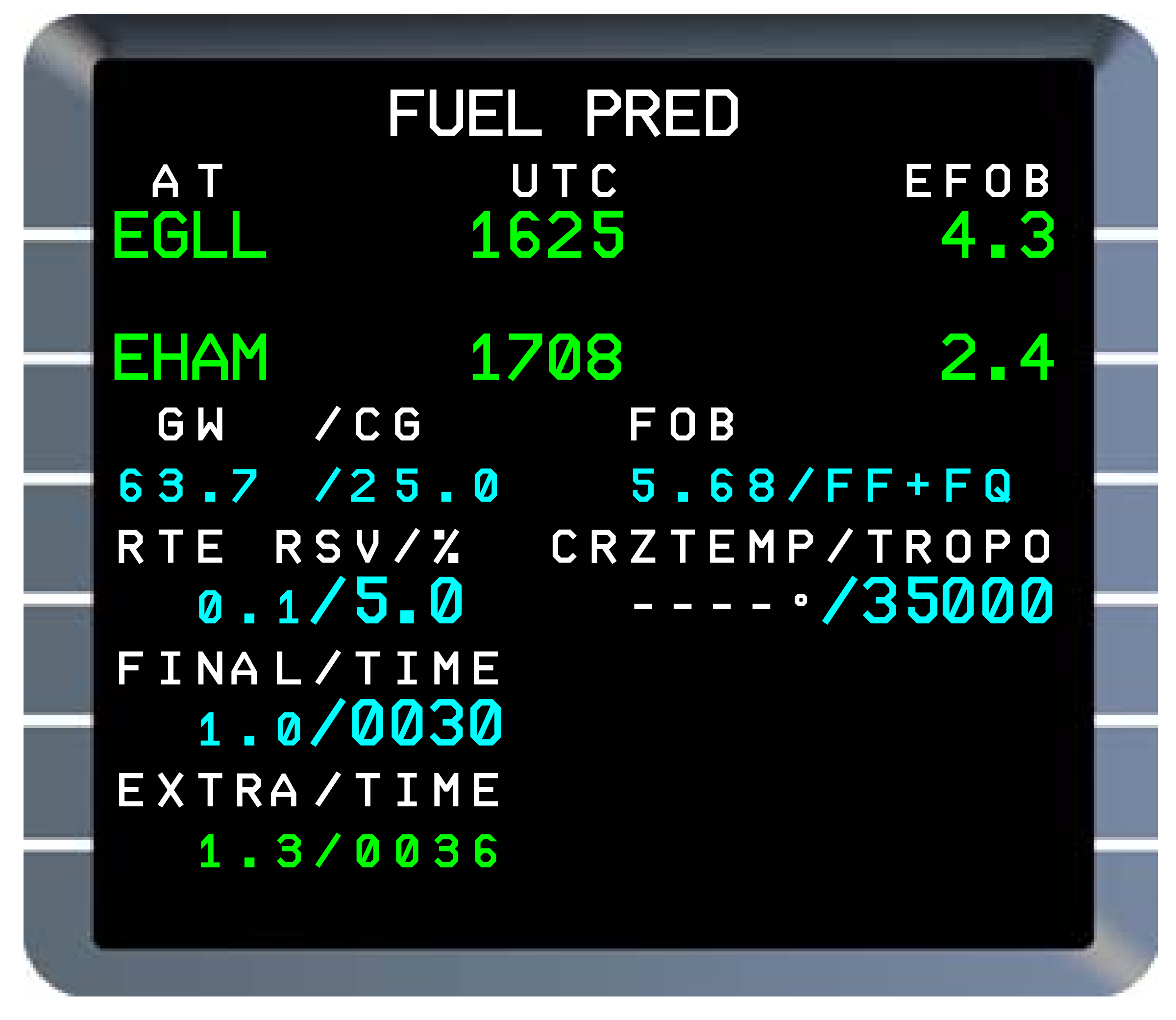
Manufacturer reference: normal FUEL PRED display in Thales FMS2 REV1. The EGLL/EHAM figures, reserve assumptions and FF+FQ annotation are historical source examples, not this flight's actual fuel state or a V3 sensor-intervention procedure. [66, PDF p. 443]