CFM56-5B: ROTATING ASSEMBLIES AND FUEL CONTROL
The supplied CFM56-5B description is a two-spool high-bypass turbofan. The low-pressure assembly includes the fan and booster/compressor stages, driven by its turbine; the high-pressure core has its own compressor/turbine assembly. N1 and N2 are percentages of their respective reference rotor speeds, not percentages of one common shaft speed or direct percentages of thrust. The combustor adds energy to core flow, and the turbine work supports both rotating assemblies. This physical distinction explains why starter-driven N2, fan motion and established combustion are different start observations. [54, PDF p. 3]
The FADEC supervises the engine through its control channels, sensors and actuated fuel/air functions. Aircraft information and the thrust-lever request enter that control system, while engine sensors describe the actual state. Fuel metering, acceleration/deceleration scheduling, rating/limiting and start management therefore belong to an interacting controller rather than a simple lever-to-fuel-valve link. The supplied architecture distinguishes dedicated engine electrical supply and aircraft-supplied backup/control paths. A running engine and a fully healthy electrical/control interface are not the same condition. [54, PDF pp. 4–9]
The low-pressure aircraft fuel shutoff path and the engine’s high-pressure/metering functions have different locations and purposes. A master/start command, a fire-isolation command and normal thrust regulation should not be collapsed into one fuel ON/OFF action. The engine fuel system also supports thermal management and controlled return paths. Monitoring fuel flow with N1/N2, EGT and oil information provides evidence of actual response. The reference composite parameter drawing illustrates labels, not a coherent idle snapshot or operating targets. [54, PDF pp. 16–25, 36–47] [78, PDF pp. 5–6]
A different CFM56-5B rating changes the installed engine/performance identity even where the display format remains familiar. The current advertised Fenix ratings are inventoried at the start of this chapter; the source scan’s CFM56-5B mechanisms do not independently establish every model-specific schedule. Keep actual rating, temperature/pressure conditions and bleed/anti-ice configuration identifiable when comparing achieved N1, fuel flow or acceleration. A discrepancy can arise from a changed request or rating as well as from a control or mechanical fault. [54, PDF pp. 10–14] [1, Current advertised A320 engine inventory] [52, Current advertised A319/A321 engine inventory]
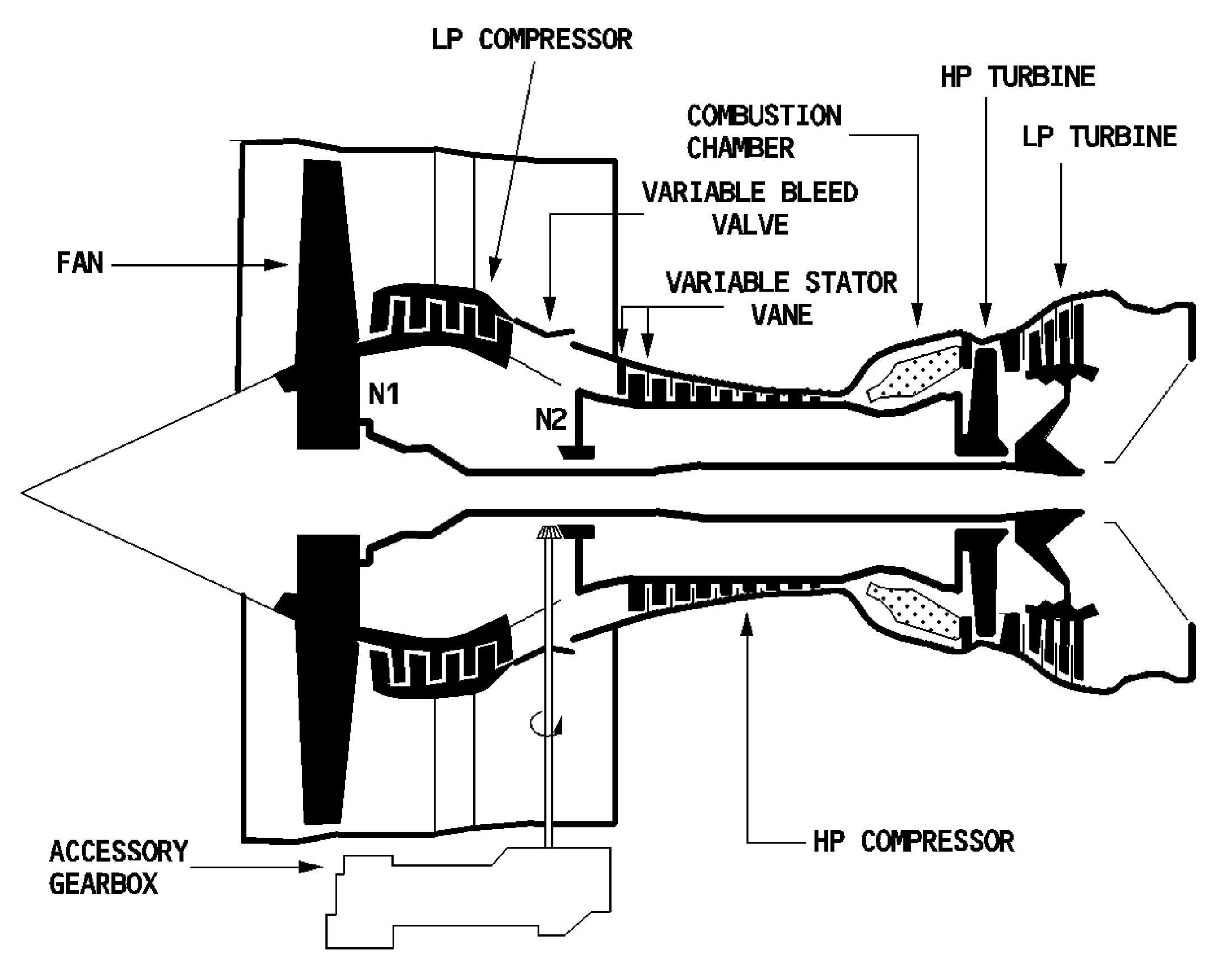
CFM56-5B cross-section with the N1 and N2 spool references. [54, PDF p. 3]