PACKS, MIXER AND ZONE-TEMPERATURE CONTROL
A pack is an air-conditioning unit, not simply a valve feeding hot engine air into the cabin. The supplied architecture conditions incoming pneumatic air through heat-exchange and air-cycle processes before distribution. Pack flow control establishes the admitted flow, while temperature control determines the thermal result. A pack can therefore have an air-supply problem, a regulating problem or a fault affecting its processing. The distinction matters when the aircraft has apparently adequate upstream bleed pressure but an unexpected cabin response. [69, PDF pp. 2–7]
The mixer combines conditioned air with recirculated cabin air before it reaches the occupied zones. Zone-temperature demand and trim-air regulation then shape the delivered temperature. The cockpit, forward cabin and aft cabin should be read separately, while recognising their shared upstream supply. A single zone deviating from demand suggests a different investigation from every zone changing together. The schematic’s thin control lines describe information relationships; they should not be mistaken for air ducts when following a physical flow path. [69, PDF pp. 3–4, 7–10]
The A319/A320 and A321 cockpit controls are not identical. The original Fenix comparison shows the former’s PACK FLOW selector and the latter’s ECON FLOW arrangement. The historical Airbus briefing likewise distinguishes the family conditioning arrangement. Follow the loaded aircraft’s control labels and the associated flow/temperature indications. Copying an A320 selector position onto an A321 does not define the same requested state. Temperature and flow remain separate quantities even when their controls are grouped close together on the overhead. [58, Original pack-flow comparison illustration] [87, Chapter 11, environmental control system; family conditioning controls]
In V3, the FAP participates in cabin-temperature requests, so a supported cabin-side change belongs in the control picture. Compare demand, actual indication and response time rather than repeatedly increasing a selector offset. A cabin has thermal inertia: the response develops after the command. A conditioning failure also affects pressure supply and ventilation considerations, but temperature control itself does not set cabin altitude. Review the relevant automatic reconfiguration in the source material before interpreting a pack closure, hot-air fault or changed flow as the same failure. [53, Flight Attendant Panel chapter; cabin temperature interaction] [69, PDF pp. 7–20]
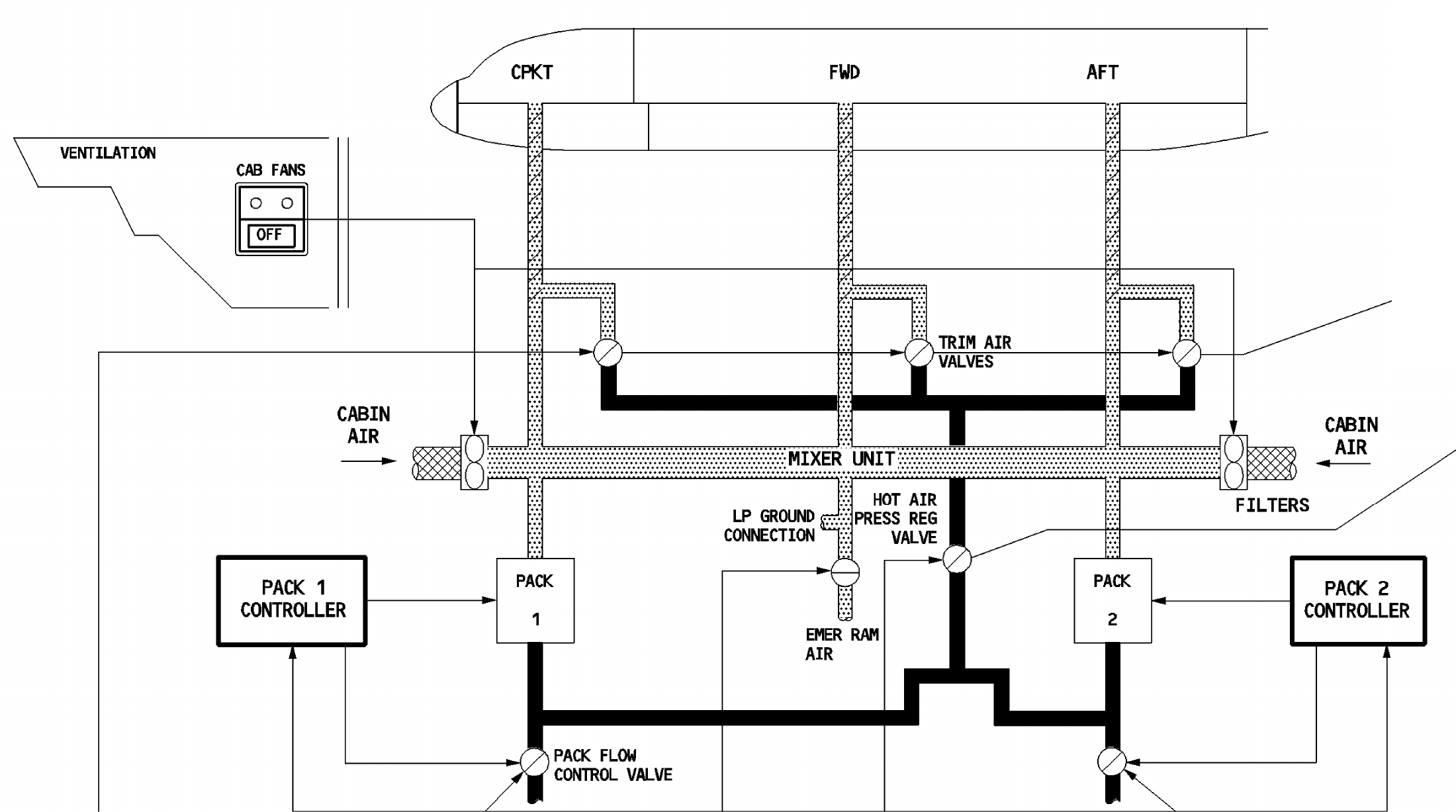
Original A320 airflow detail: pack output, mixer, cabin-air recirculation and trim-air distribution. Thin control/display connections continue outside this detail. [69, PDF p. 3]