BEFORE START: CLOSE THE PREPARATION LOOP
Before pushback and start, reconcile route, loading, performance and departure setup, then complete the required ground coordination. Establish communication, clearances and door state and confirm that the cockpit and tug crew are working to the same sequence. Finish prolonged keyboard work before the aircraft begins to move. [23, PDF pp. 1034-1038] [68, PDF p. 7]
For an APU-assisted start, establish APU AVAIL and the required pneumatic supply. Electrical generation and bleed-air supply remain separate checks. If transferring from external power, select it off at the appropriate stage, confirm the remaining bus supply and coordinate the physical disconnection. [64, PDF pp. 2-4] [62, PDF p. 6]
Keep the thrust levers at IDLE and follow the coordinated brake instructions. The supplied normal procedure commonly starts engine 2 first; use the order required by the selected procedure and ground arrangement. Monitor one complete start before beginning the other, retaining an actual indication-based check rather than judging completion by elapsed time. [23, PDF pp. 1039-1047] [68, PDF pp. 4-5]
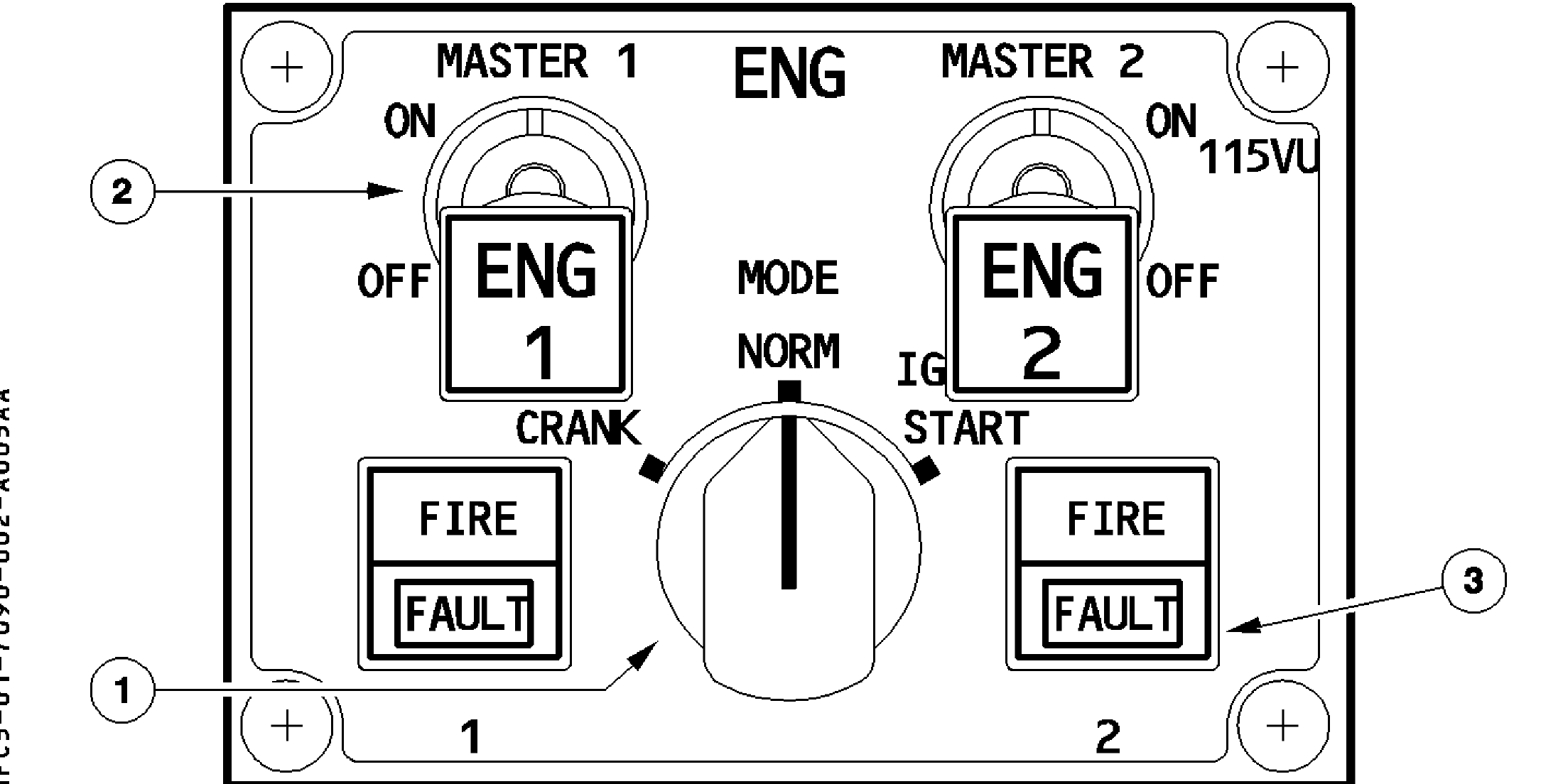
ENG MASTER switches and the CRANK / NORM / IGN START selector. [54, PDF p. 37]
IN PRACTICE: At Frankfurt: make the start possible
Before you begin: The A320/CFM exercise is loaded, the route and final loading have been checked, and the aircraft is secured at the stand. This is a normal two-engine start using the APU as the pneumatic source. A pushback clearance, if required, is separate from permission to start.
1. Close the loading loop
Action. Compare the final loadsheet with INIT B and the current EFB loading. Recalculate takeoff performance after any change, then read the accepted mass, centre of gravity and takeoff entries back on the MCDU.
Check. The aircraft, the final loadsheet and the takeoff calculation describe the same departure. A revised load has not left an older set of speeds behind. [23, PDF pp. 1034-1038] [66, PDF p. 123]
2. Finish the ground conversation
Action. Complete boarding and the Before Start cabin/ground coordination. Confirm that doors needed for departure are closed, servicing is clear and the tug or pushback service is in the intended state. Keep the aircraft secured until the ground sequence calls for brake release.
Check. The DOOR indications and actual ground-service state agree. There is a clear plan for whether the aircraft will remain at the stand or be pushed back. [23, PDF pp. 1034-1038]
3. Give the APU a defined job
Action. Start the APU if it is not running, wait for AVAIL, and select APU BLEED for this APU-assisted start. Check the BLEED page for the available air supply rather than treating the APU sound as proof.
Check. The APU is available and the pneumatic supply needed for the starter is established. Electrical availability and bleed-air availability have each been checked. [23, PDF pp. 1034-1038] [21, PDF pp. 103-106]
4. Release the external connection deliberately
Action. With APU AVAIL and its generator ready, select external power off. Confirm the resulting APU supply, then have the cable/service removed before pushback.
Check. The cockpit remains powered from its intended source and the external cable no longer restrains the aircraft. A ready APU has been distinguished from one actually supplying the buses. [23, PDF pp. 1034-1038] [23, PDF p. 1161]
5. Set the start workspace
Action. Confirm both thrust levers physically at IDLE and both ENG MASTER switches OFF. Bring the engine indications into view, set the beacon for the engine-start phase, and complete the Before Start checklist.
Check. The controls agree with a start from idle, the engine display is ready for monitoring, and the aircraft has reached the checklist gate for starting. [21, PDF pp. 103-106] [23, PDF pp. 1034-1038]
6. Coordinate the brake release
Action. If the planned pushback requires movement, release the parking brake only at the coordinated point. Keep attention on the pushback path and do not begin unrelated flight-control or flap checks while the ground crew is moving the aircraft.
Check. The tug, brakes and aircraft movement agree. The start can be monitored without losing the ground-position picture. [23, PDF pp. 1034-1038] [21, PDF pp. 107-116]
Complete when: Proceed when the aircraft is clear for the planned start, the air and electrical sources are confirmed, and engine indications are in view.