V2500: EPR REFERENCE AND INSTALLATION-SPECIFIC BEHAVIOUR
The IAE V2500 installation must be identified independently of the CFM engine even though the crew’s broad thrust/start tasks are familiar. EPR, engine pressure ratio, is its primary thrust reference, while N1/N2, EGT, fuel flow and oil information remain separate measurements. An EPR reading is not an N1 percentage with a different scale. Compare the requested rating, actual primary parameter and supporting engine state. The original Fenix IAE E/WD illustration used in this guide shows stopped engines; it demonstrates display layout rather than normal running values. [21, PDF p. 59] [70, Engine-type detection and IAE/EPR presentation] [58, Engine/airframe-specific model discussion]
The currently advertised V2524-A5, V2527-A5 and V2533-A5 SelectOne installations belong to A319, A320 and A321 respectively. A shared V2500 family name does not establish the same rating, acceleration, idle response or takeoff performance. The broad two-spool principles remain useful, but the supplied CFM-only powerplant extract is not authority for IAE fuel-control component details. This source boundary is deliberate: a professional comparison should identify which differences have been documented rather than fill gaps by changing the name above a CFM schematic. [52, Current A319/A321 engine inventory] [1, Current A320 engine inventory] [54, PDF p. 3]
The V3 presentation describes independent engine-control behaviour and the IAE pre-start motoring option. The current configuration register documents alternative cranking standards. An intended motoring phase can therefore precede the later fuel/ignition part of the sequence. Its presence is not established by silence or elapsed time alone: compare the selected option, actual rotor/valve/ignition information and the applicable start procedure. Do not shorten the intended phase because a familiar CFM start produced combustion sooner. [53, FADEC chapter; independent control and IAE motoring] [70, Available Options: fnx_iae_crank_type]
Fuel cooling/recirculation, electrical interfaces and control hardware also need engine-specific effectivity. The historical Airbus briefing distinguishes engine-oil cooling in its IAE recirculation explanation. That physical difference can affect how fuel temperature and routing are interpreted without making every historical threshold current. For a simulator comparison, use the same atmospheric/loading case, identify the actual engine rating and record start progression and steady response separately. Engine-specific behaviour earns its explanation through those mechanisms, not through an unsupported claim that all IAE starts are longer or all CFM idle values are equivalent. [87, PDF pp. 98–103] [21, PDF pp. 99–106]
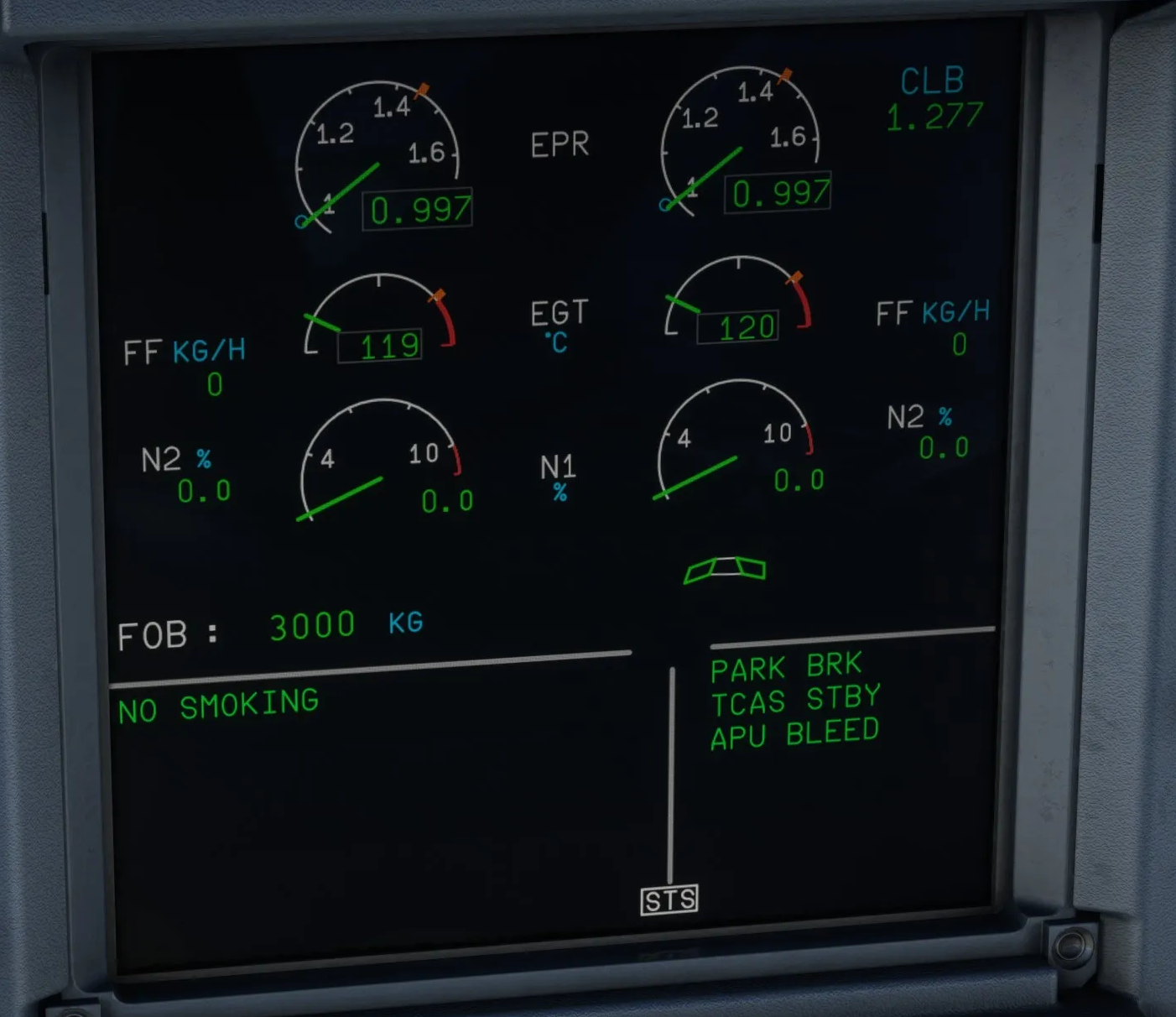
Original Fenix IAE E/WD with EPR as the primary thrust reference. Engines are stopped: N1, N2 and fuel flow are zero. [70, Source illustration]