CONFIRM THE AIRCRAFT CONFIGURATION
The worked Frankfurt-Heathrow sector uses an A320 with CFM engines. The A319 and A321 share much of the flight deck but require their own loading and performance calculations. Confirm the loaded airframe before selecting the flight-planning profile. The common cockpit can make an aircraft-profile mismatch remarkably easy to overlook. [52, The Fenix Simulations A319 & A321 for MSFS / What's Included?]
The engine choice changes the primary thrust reference: N1 on the CFM installation, EPR on the IAE installation. Select the correct engine variant in the planner and recognise its indications and start procedure in the aircraft. Performance figures and expectations carried over from the other installation can produce a preparation that appears consistent until the engines expose the difference. [1, What's Included?] [54, PDF p. 3] [21, PDF p. 59]
Compare the loaded model with the OFP profile, including airframe, engine and wingtip option, before importing a saved flight. Resolve discrepancies at the gate. The later mass, fuel and takeoff checks depend on the identity established here; a correct route cannot compensate for calculating it for the wrong aircraft. [52, What's Included?] [23, PDF pp. 1024–1025]
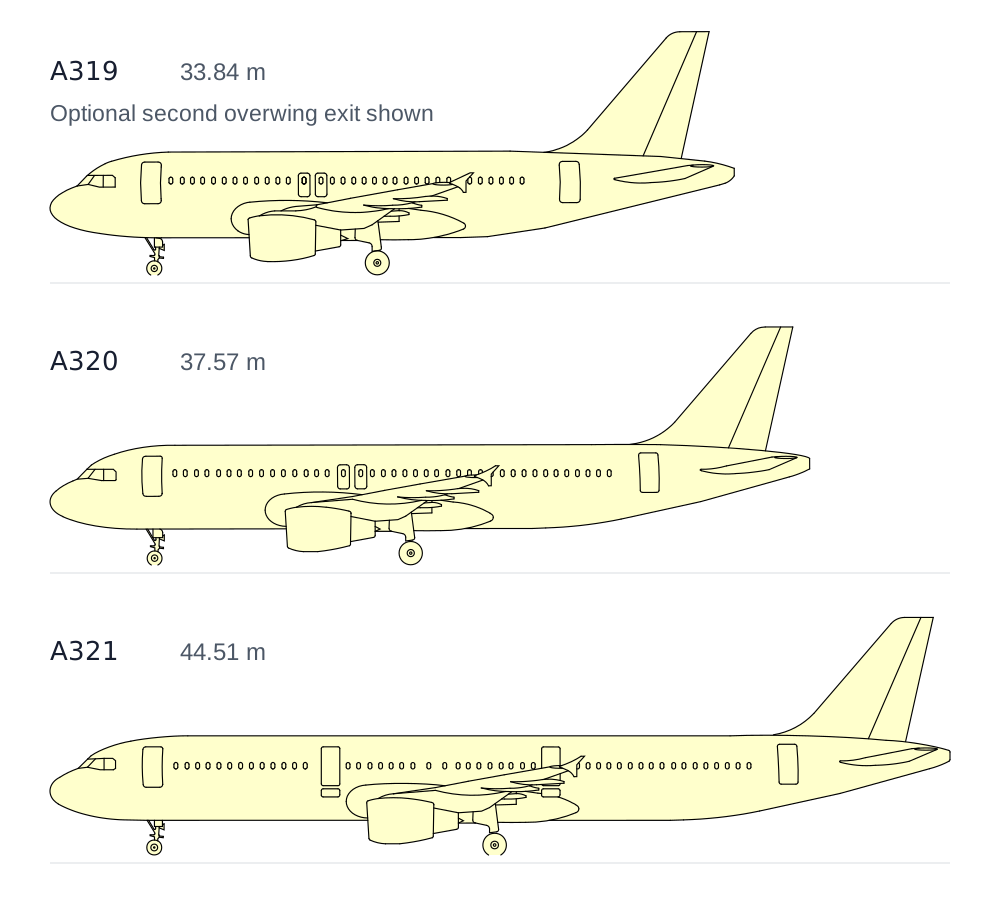
Airbus ceo side profiles at one length scale: A319 33.84 m, A320 37.57 m, A321 44.51 m. Original manufacturer contours. The A319 source shows the optional second overwing exit. [55, PDF p. 42] [56, PDF p. 44] [57, PDF p. 67]