THRUST RATING, AUTOTHRUST AND PROTECTION REQUESTS
The thrust levers define a request and, with autothrust operating, an available range; they do not follow every automatic thrust change physically. Detents provide identifiable operating selections including IDLE, CL, FLX/MCT and TOGA. The same physical FLX/MCT position has different roles in the applicable takeoff or continuous-thrust situation. A valid FLEX takeoff depends on a calculated assumed temperature and performance case. Neither the lever label nor an accepted temperature independently proves that the takeoff performance is valid for the runway, mass and conditions. [54, PDF pp. 10–14] [21, PDF pp. 51–64, 117–124]
FADEC and autothrust occupy different parts of the control chain. The engine controller manages engine operation and permitted response; autothrust supplies a request according to its active mode. In climb, thrust and pitch/speed functions can divide the task differently from level-flight speed control. Read the FMA to identify the active objective, then compare actual engine parameters. A CL lever position with a speed-control mode can coexist with varying actual thrust. Conversely, a thrust mode can fix a regime while pitch guidance controls speed. [54, PDF pp. 10–14] [91, Printed 1.22.30, Autothrust/FMA; Autothrust description and FMA modes] [21, PDF pp. 51–64]
Armed, active, disconnected and protection-related autothrust states should remain distinct. Alpha-floor, where available, requests protective thrust under its defined conditions; it is not the pitch-law angle-of-attack limiter. A resulting retained thrust state and the required recovery/disconnection procedure are likewise distinct from ordinary selected-speed control. The source effectivity and actual warning/mode presentation determine the response. Avoid the misleading shortcut that a disconnected autopilot means autothrust is disconnected, or that a thrust-lever movement alone establishes which automatic systems remain active. [91] [73, PDF pp. 21–23, 29–33] [21, PDF pp. 51–64]
Independent engine response matters most when symmetry is assumed. Equal lever positions can produce different transient parameters if the installed conditions or control state differ. Check accepted rating, actual thrust reference, acceleration and supporting indications on both sides. A load/performance revision may require a different calculated request without any engine fault, while a control or physical fault may prevent an otherwise valid request from being achieved. Keeping calculation, entered data, lever command, FMA objective and engine result separate provides a precise account of the event. [53, FADEC chapter; independent engine-control modelling] [54, PDF pp. 4–14, 40–47]
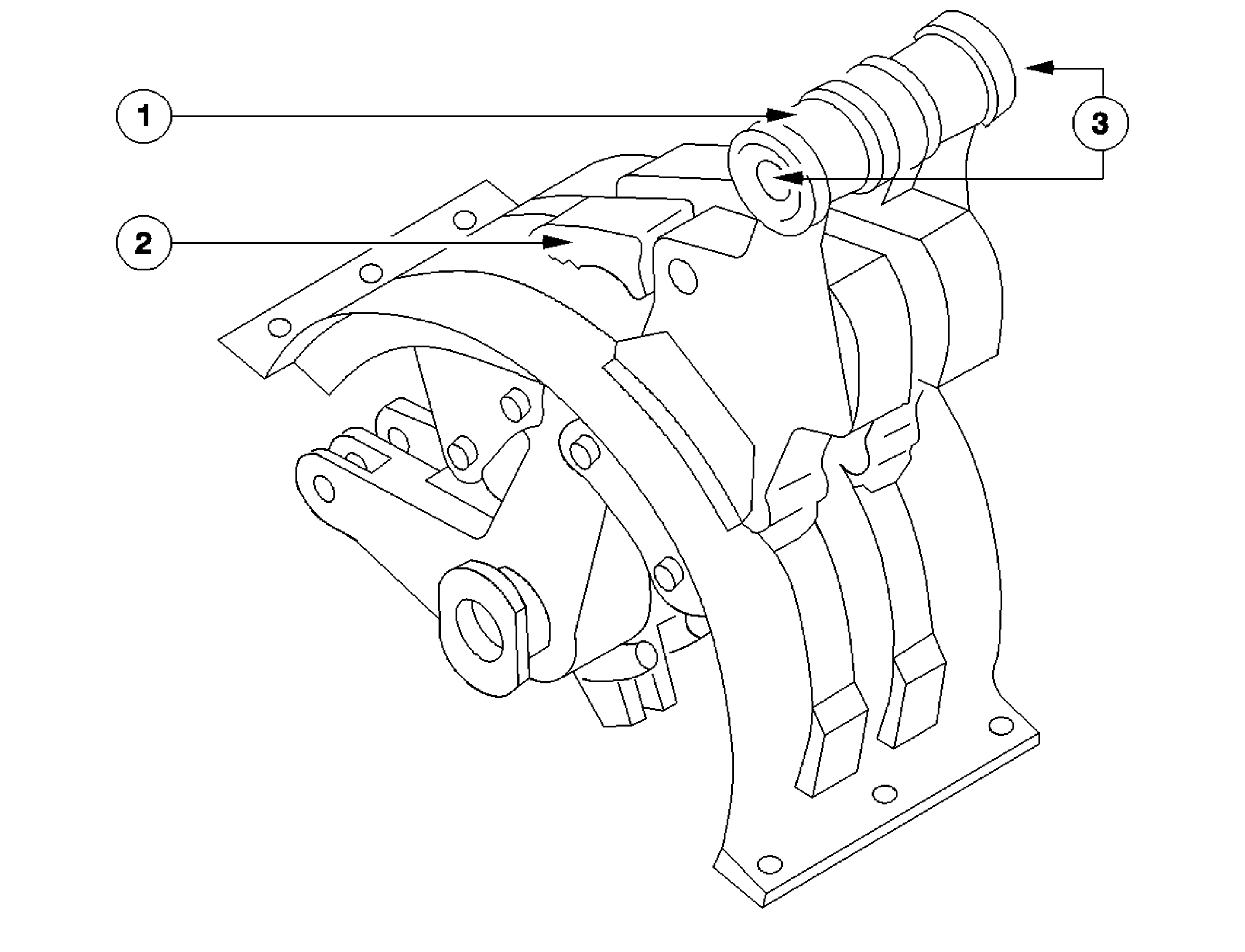
Original thrust-lever and reverse-lever hardware drawing. [54, PDF p. 36]