ENGINE AND APU FIRE DETECTION, ISOLATION AND DISCHARGE
Engine and APU protection separates detection from isolation and extinguishing. The supplied description uses two detection loops and a fire-detection unit. With both loops healthy, the required detection logic compares their fire signals; with a loop identified faulty, the remaining valid loop can still provide protection. A loop fault therefore does not have the same meaning as a confirmed fire, and loss of detection capability does not establish that the compartment is safe. Preserve the warning title and surviving detection state when interpreting the event. [78, PDF pp. 3–4]
The engine FIRE control has multiple isolation consequences in the source architecture. It closes the relevant fuel and hydraulic fire shutoff paths, removes bleed-related supply, affects the generator/FADEC arrangement and arms the extinguishing discharge circuits. This is why a fire-isolation action can produce downstream electrical, pneumatic and hydraulic changes even before the agent is discharged. Those consequences are part of one isolation chain, not necessarily a new unrelated failure. The exact result must be checked against the applicable engine and installed standard. [78, PDF pp. 5–6]
SQUIB and DISCH indications identify different states: preparation of an electrically initiated discharge circuit and evidence associated with bottle pressure/discharge. A test demonstrates specified indications without being the same action as actual extinguishing. The engine and APU arrangements also differ in bottle provision and in ground automatic response. The supplied APU design can shut down and discharge automatically after an actual ground fire; the normal TEST does not reproduce every automatic consequence of a real event. Do not use a successful lamp sequence to infer that an emergency-isolation action occurred. [78, PDF pp. 4, 6–10]
Advanced study should map the warning to the protected zone, confirm the commanded isolation and then assess the remaining state. A disappeared warning, a discharged bottle and a stopped engine describe different evidence. The procedures determine timing, repeat discharge and subsequent flight decisions; they are not replaced by this mechanism description. In Fenix, select an explicitly supported scenario and record the displayed consequences. Publicly documented failure capability does not prove every physical detector, bottle or shutdown interlock can be individually failed or manipulated through the user interface. [78, PDF pp. 3–10] [86, Failures Guide; available failure-management interface] [88, ECAM philosophy; action and remaining status]
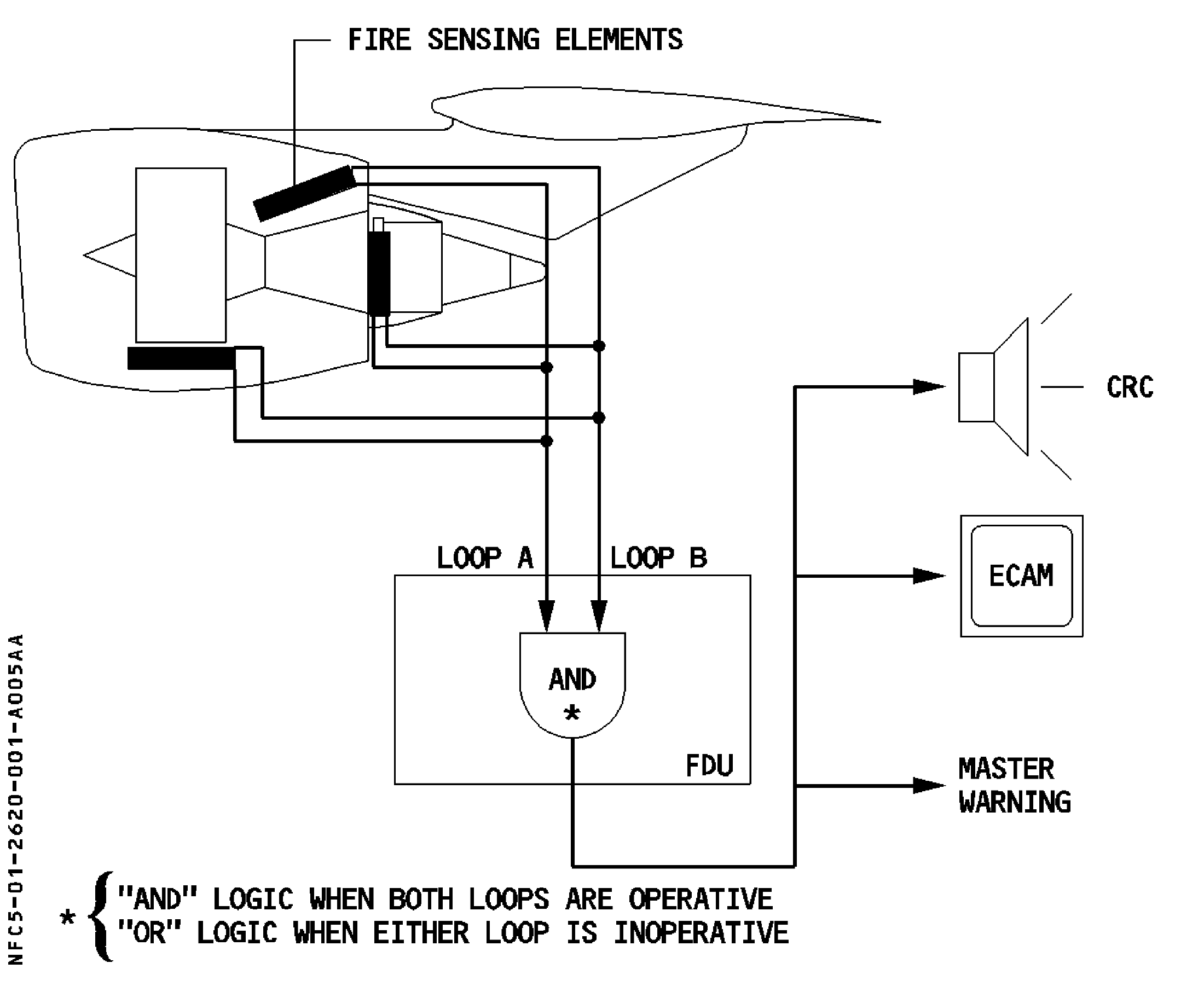
Engine fire-detection loops and the warning path. [78, PDF p. 3]