SEC F-PLN: COPY, INDEPENDENT PREPARATION AND CONTROLLED ACTIVATION
SEC is useful for an alternate arrival, a return or another deliberately prepared route. COPY ACTIVE and independent SEC INIT are different starting methods. In the supplied standard, copying also carries relevant performance information, while certain changes can break the copied relationship. Do not assume that a spare plan is either a permanently synchronized mirror or a harmless route-only sketch. [66, PDF pp. 427-439,237]
1. Choose the preparation method. COPY ACTIVE is convenient when the alternative shares the current flight. For an independently initialized secondary plan, use the supported SEC INIT workflow and complete its required data. The old guide specifically distinguishes some second-runway/departure cases because changing a copied runway can affect SEC PERF availability. Verify actual page availability instead of promising identical behaviour on every current Fenix standard. [66, PDF pp. 427-439,237]
2. Revise and review SEC deliberately. Read the SEC title throughout, inspect the alternative path on the ND and complete the required mass/performance assumptions. A later active-route revision is not guaranteed to propagate to the spare. After vectors or route changes, inspect the secondary sequence again before relying on a return prepared earlier at the gate. [66, PDF pp. 427-439,237]
3. Compare the first leg before activation. The source permits different activation treatment when SEC's current leg matches ACTIVE versus when the two diverge. With divergence, SELECT HDG/TRK FIRST can require an understood selected-guidance state before replacement. Establish the current aircraft position, clearance and intended first leg; do not activate merely because the new destination name is correct. [66, PDF pp. 427-439,237]
4. Inspect transferred non-route data. The guide warns that GW/CG entered in secondary initialization can transfer during activation and affect guidance/performance. Check the actual current loading and mass references, particularly if SEC was built as a future sector or retained old data. Secondary activation is therefore not just a change of magenta-line destination; it requires a complete relevant data review. [66, PDF pp. 427-439,237]
5. Activate, then verify the working flight. Read the active route, current FROM/TO, destination and predictions after ACTIVATE SEC. Confirm the FMA and targets and make any necessary sequencing/revisions from an understood state. Retain the original clearance/planning record for recovery. Copying or editing never activates automatically, and an uplink to SEC never authorises bypassing this review. [66, PDF pp. 427-439,237]
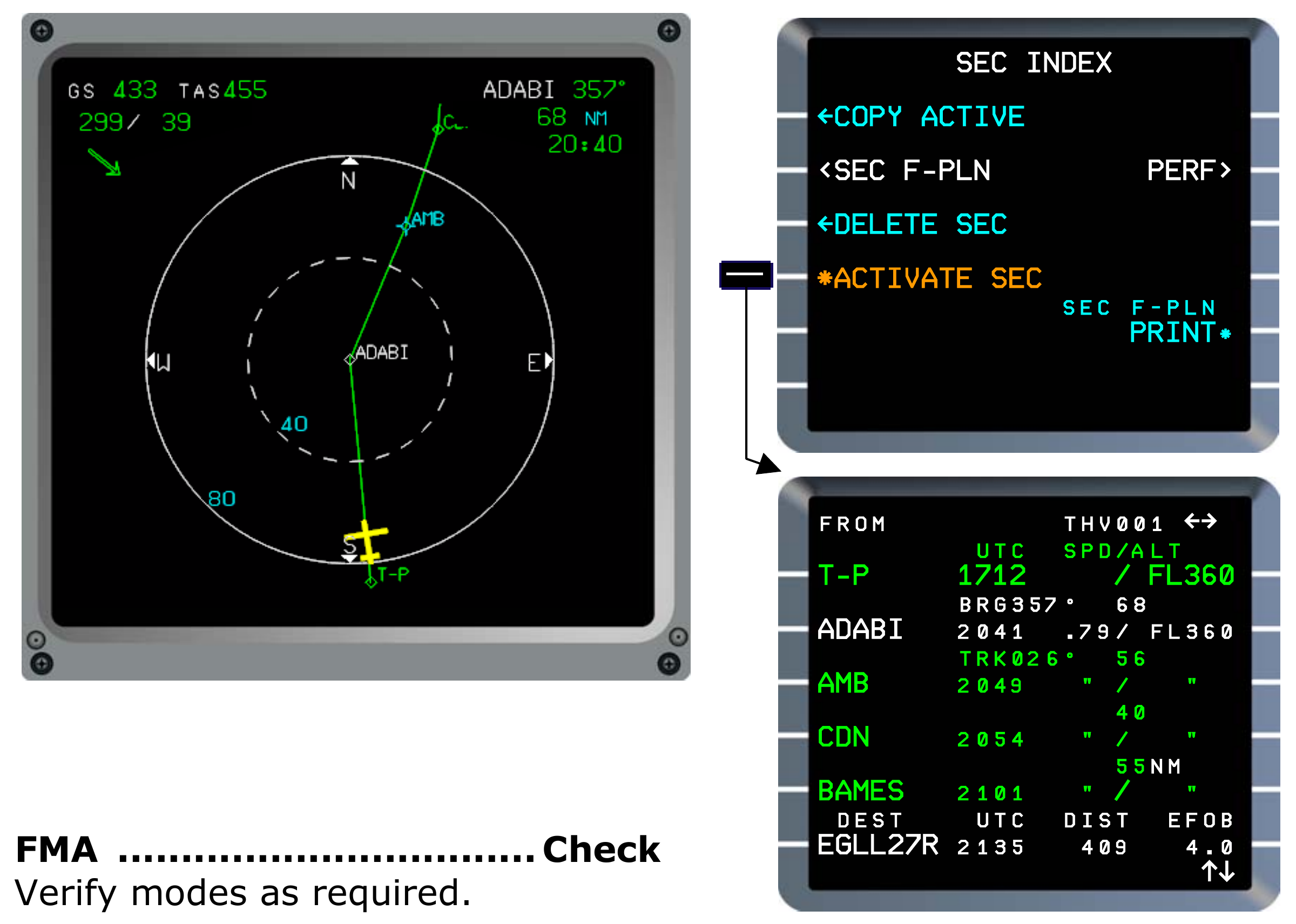
Manufacturer reference: complete ND, SEC INDEX and resulting active F-PLN panels after secondary-plan activation. The source includes its complete FMA-check annotation. Historical example identifiers and predictions. [66, PDF p. 437]