FMA: THE GUIDANCE AND THRUST CROSSCHECK
Read the FMA across its five columns: thrust, vertical guidance, lateral guidance, approach capability and AP/FD/A/THR status. It establishes the active and armed guidance state after a selection and during an automatic transition. Treat it as part of the normal mode-selection crosscheck. [21, PDF pp. 51-64]
In the example THR CLB, CLB and NAV identify the active thrust, vertical and lateral modes. Green and blue provide the usual active/armed distinction for mode names, with other conventions for particular states. Read the actual words and status rather than inferring the whole guidance state from one colour or a familiar panel light. [21, PDF pp. 51-64]
Compare the FD guidance, autopilot status and actual flight-path response with the FMA. After a selection, identify what has become active, what remains armed and the conditions needed for the next transition. That scan is especially valuable during captures, approach arming and any reversion from the intended mode. [21, PDF pp. 51-64]
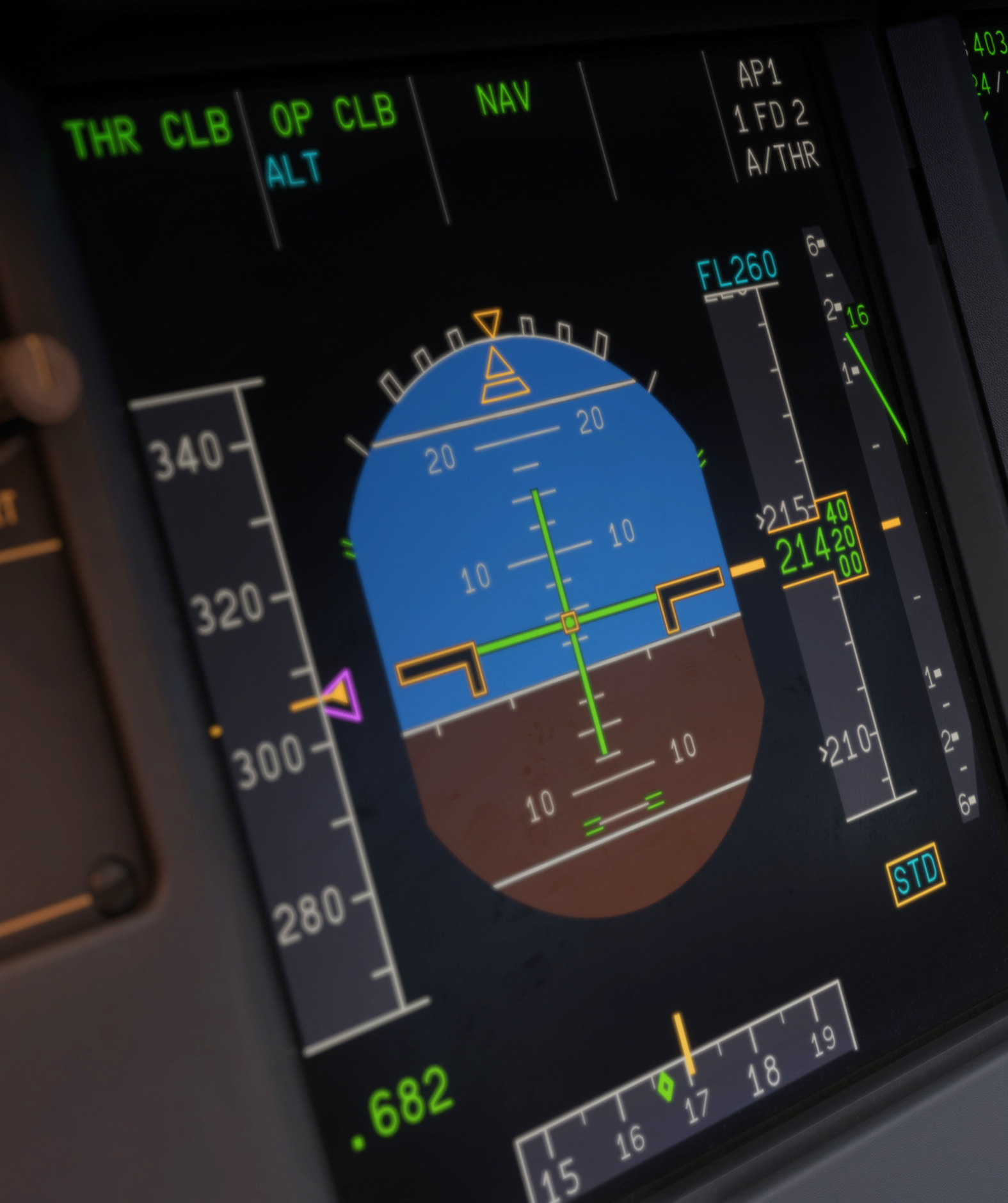
Original Fenix PFD: THR CLB / OP CLB / NAV, with ALT armed. This is open climb, not managed CLB. [1, Source illustration]