AIR CONDITIONING AND CABIN-TEMPERATURE CONTROL
The two packs condition incoming air before distribution to the cockpit and cabin zones. Recirculated cabin air is mixed with conditioned air. Follow that supply and distribution arrangement when investigating a temperature problem; a selected temperature requires both a functioning air source and a responding control system. [69, PDF pp. 2–5]
Compare the selected temperatures with the cockpit, forward-cabin and aft-cabin indications and allow time for a response. A zone that is not moving towards the selected condition deserves a supply and selection check before another large temperature change. Treat the separate zones as part of one controlled distribution system. [69, PDF pp. 2–3]
In V3, the cabin panel can adjust cabin temperature relative to the cockpit selection. Compare a FAP adjustment with the resulting temperature information and allow for the cabin's response time. The cabin crew's controls participate in the same air-conditioning system; include them when reconciling a selection with the indication. [53]
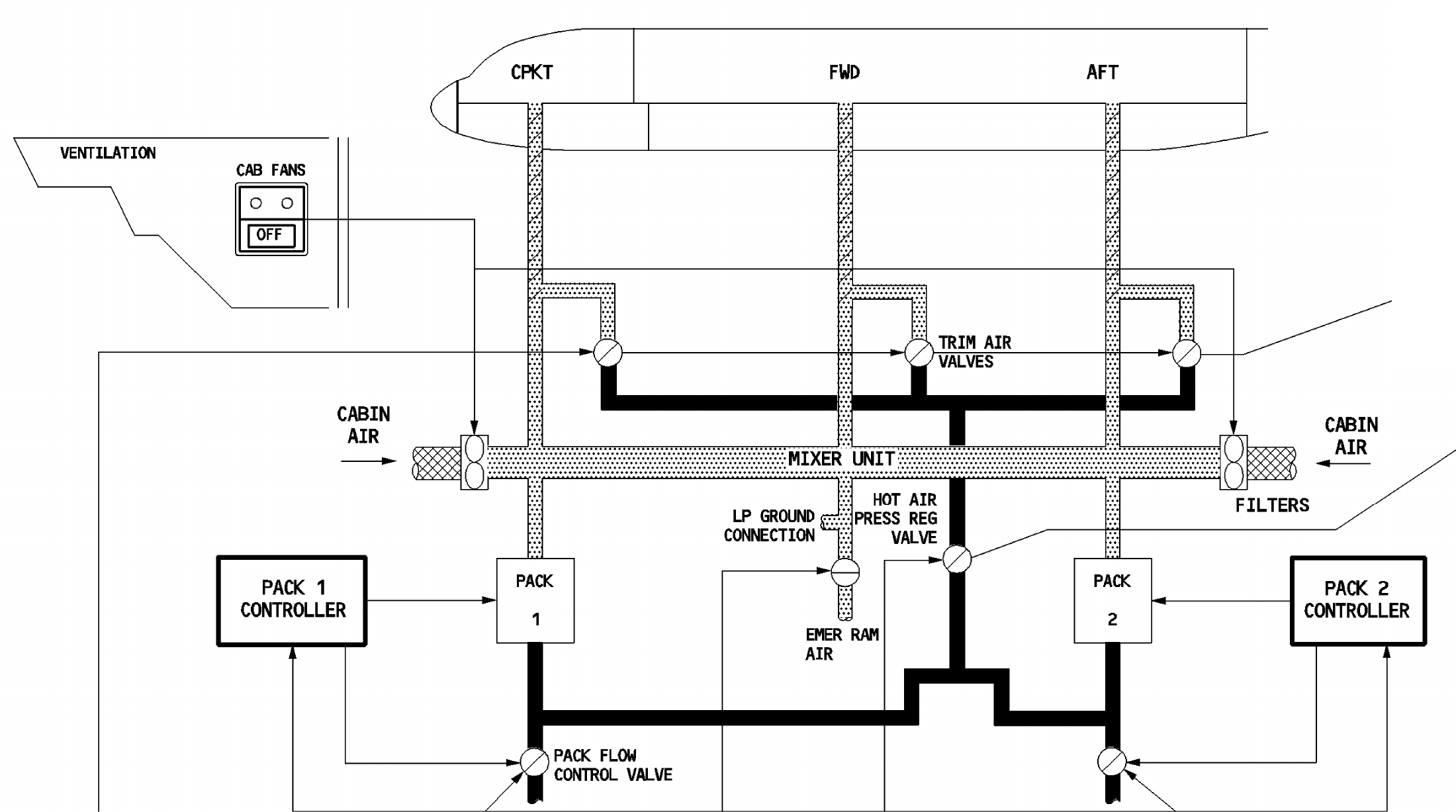
Original A320 airflow detail: pack output, mixer, cabin-air recirculation and trim-air distribution. Thin control/display connections continue outside this detail. [69, PDF p. 3]
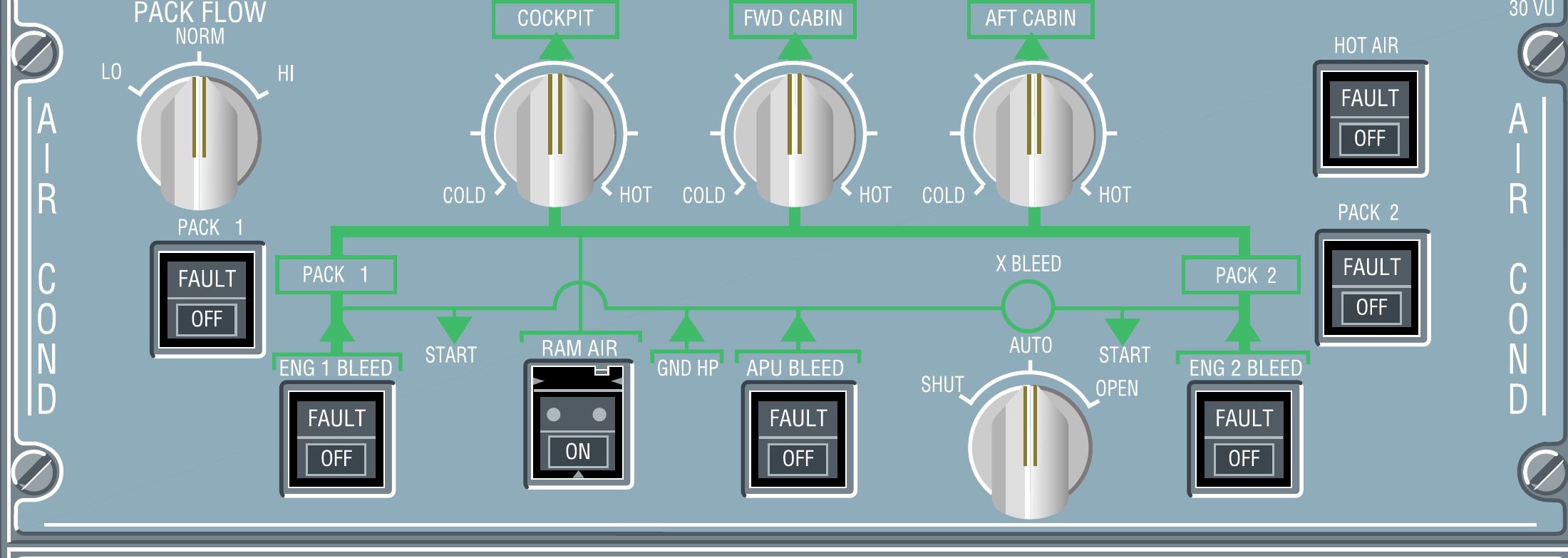
Air-conditioning controls and the three cabin temperature selectors. [63, PDF p. 1]
IN PRACTICE: Condition the cabin and check its response
Before you begin: An appropriate pneumatic/conditioning source is available. Use the stated A320 configuration and the actual cabin loading/environment; do not import a different family member’s panel setting.
1. Confirm the supply before adjusting temperature
Action. Review BLEED and the pack indications. Establish the intended pack supply and normal pack selection before trying to correct a warm cabin with temperature controls alone.
Check. Conditioned-air supply is available and the receiving pack state agrees with the preparation. [69, PDF pp. 2-8] [69, PDF pp. 11-13]
2. Check the appropriate flow setting
Action. On the A320, review PACK FLOW against the planned load and conditions. Read actual pack behaviour with the selected supply; APU supply and start logic can affect what the controller delivers.
Check. The flow selection is intentional, and the actual flow state is interpreted through its control logic rather than as a direct fixed output. [69, PDF pp. 11-13] [23, PDF pp. 1010-1033]
3. Set the zone targets
Action. Set the cockpit, forward-cabin and aft-cabin temperature controls to the intended comfort targets. Review the displayed zone information so each adjustment is tied to the correct part of the aircraft.
Check. The targets are deliberate and the affected zones are identified. A generic photograph’s displayed temperature has not become a mandatory setting. [69, PDF pp. 2-8] [69, PDF pp. 11-13]
4. Observe a measured change
Action. If a zone needs adjustment, make a small deliberate change and give the system time to respond. Compare the subsequent temperature trend with the requested change and the available supply.
Check. You have evidence of the zone response without repeatedly chasing a naturally delayed indication. [69, PDF pp. 2-8]
5. Include cabin-side control
Action. Where the working V3 FAP/cabin setup provides temperature interaction, review its indication alongside the cockpit request. Keep any cabin-side adjustment coordinated with the chosen cockpit target.
Check. The cabin and cockpit settings form one understood temperature-control state. The pressure indication is not being used as a temperature check. [53, Chapters CIDS and FAP] [69, PDF pp. 21-22]
Complete when: The packs and temperature controls have an understood source and a sensible response. Cabin temperature is checked as a trend, separately from cabin pressure.