FRANKFURT TO HEATHROW: LET US BUILD A FLIGHT
Frankfurt, an Airbus at the gate, and London Heathrow waiting at the other end. From the captain's seat, the first challenge seems to be the number of switches. We will give them some context before asking you to use them. This companion follows a Fenix A320 flight from preparation to parking, explaining what you are asking the aircraft to do and how to recognise its answer. The A319 and A321 join the story where their differences matter. We keep the version-specific details where they matter and build the explanation one useful question at a time.
You do not need to arrive knowing what every abbreviation means. We introduce the useful ones beside the equipment or task they describe. The recurring questions are ordinary ones: where is the power coming from, which information has the aircraft accepted, and what should change after this selection? Once those questions make sense, the labels become easier to remember. You are learning a connected aircraft, so an action on the overhead may produce its most useful answer on a screen in front of you.
Read a chapter, then use its workshop to try the task in the simulator. The separate checklists provide a compact sequence when you want one; these chapters provide the explanation behind it. You can pause a learning session to inspect an unexpected result without abandoning the whole flight. Our Frankfurt–Heathrow example gives the tasks a shared destination, but you may repeat electrical preparation, cabin coordination or a flight-plan entry on its own. Familiarity grows from recognising what happened, rather than from trying to race through the switches.
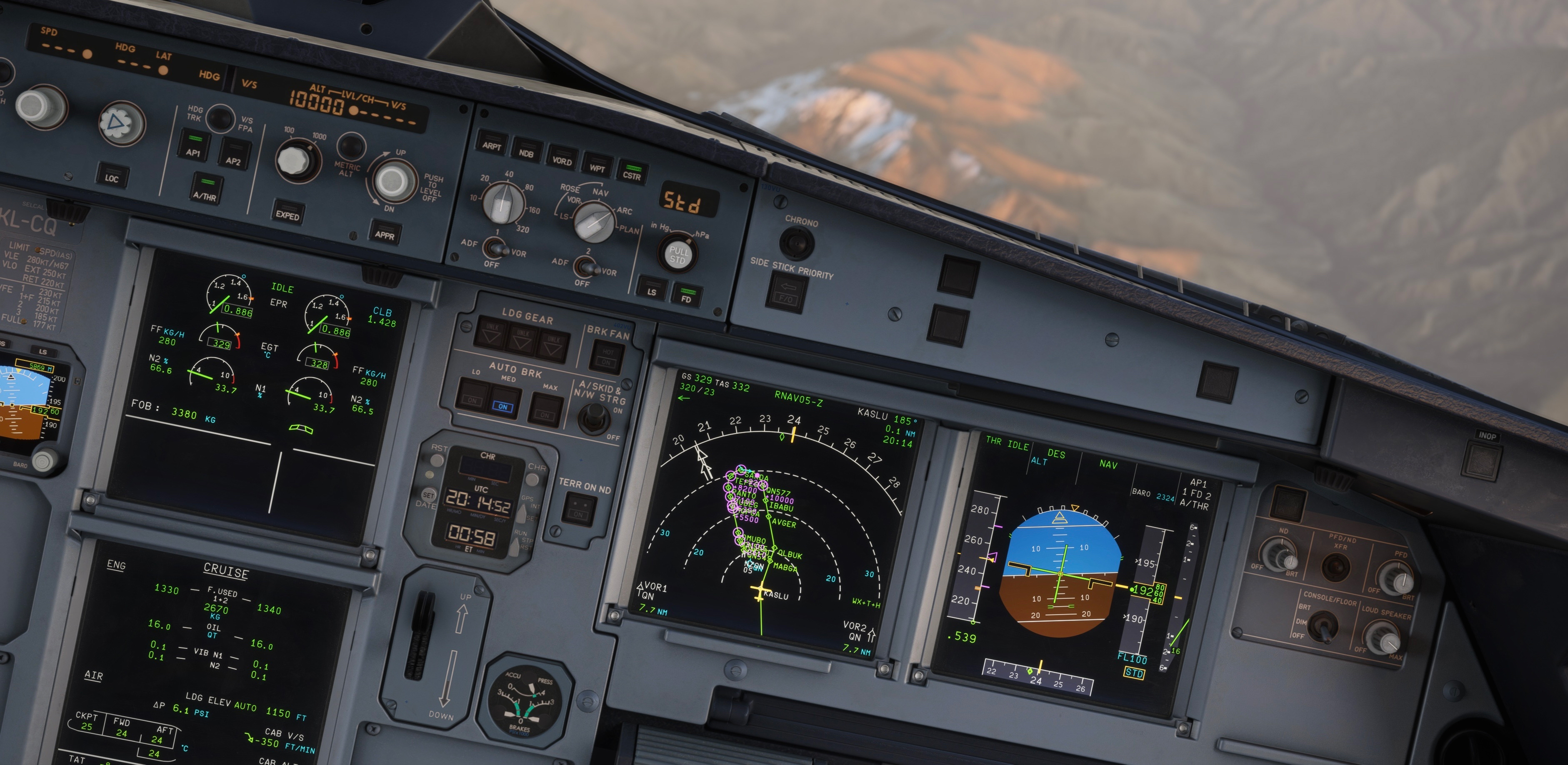
Original Fenix A320 main panel from the first-officer side. IAE/EPR engine display; the overhead and full pedestal are outside the frame. [1, Source illustration]