FUEL: THE AMOUNT, ITS LOCATION AND ITS PATH TO THE ENGINES
Fuel preparation has a physical side and an information side. The aircraft must actually contain the intended fuel, and its loading information, Operational Flight Plan and MCDU entries must describe that same situation. The MCDU is the flight-management keypad and display on the pedestal. Entering a block-fuel figure there gives the computer information for predictions; it does not refuel the tanks. ECAM FUEL helps you check the amount on board and where it is distributed. Compare those actual quantities with the planned and entered figures before trusting calculations that depend on them. [32, PDF pp. 2–3] [26, PDF pp. 123–124]
The A320 system described in the supplied manual has a centre tank and inner and outer wing tanks. Fuel is supplied and transferred through a particular arrangement, including outer-to-inner wing transfer. It is therefore normal for quantities in different tanks to follow different patterns rather than all fall at the same rate. The tank-location drawing helps you connect a number on FUEL with a place in the aircraft. The system page then adds the feed and transfer picture. Read the changing quantities through that arrangement, with the normal pump configuration for the actual loaded aircraft. [32, PDF pp. 2–6]
The A321 deserves a fresh look. Its fuel-transfer arrangement uses jet pumps, and installed Additional Center Tanks, or ACTs, add another transfer stage. You do not need to start by memorising the internal operation of every transfer device. First recognise which airframe you have, where it stores fuel and how its controls and display differ. The enlarged original Fenix comparison shows why this matters: the A319/A320 centre-tank controls have PUMP labels, while the A321 has L XFR and R XFR transfer labels. Familiar positions on the panel can contain controls with a different job. [10, What's Included?] [9, ACT installation, control and transfer description]
For the worked flight, check the quantity in the aircraft, the intended quantity in the plan and the value accepted by the flight-management system. If they disagree, investigate which stage has not been completed. Perhaps a requested loading action is still in progress, or perhaps the computer still contains an earlier value. Use the actual state to settle the question. A beautifully consistent flight plan is useful only when it describes the aircraft at your stand. [32, PDF pp. 2–3] [26, PDF pp. 123–124]
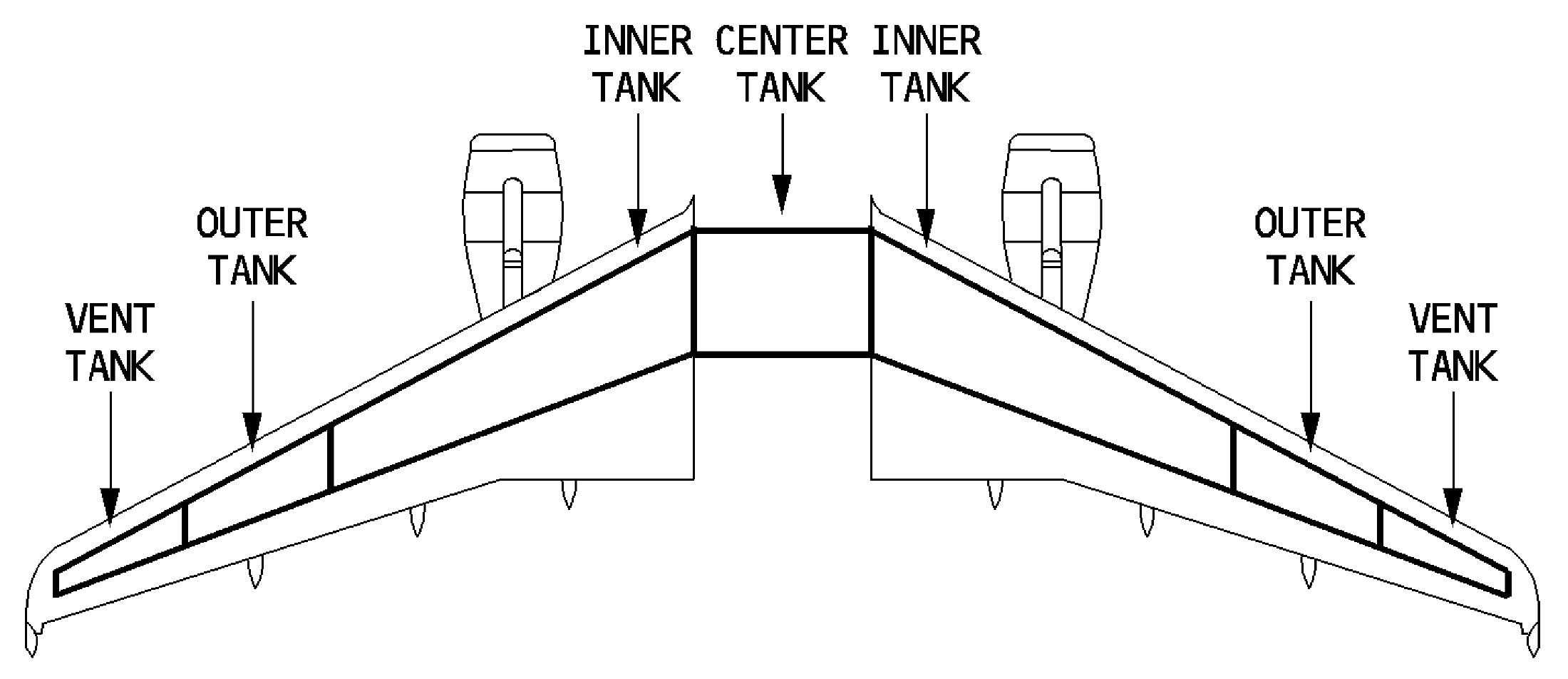
A319/A320 outer, inner and centre tank locations. [32, PDF p. 2]
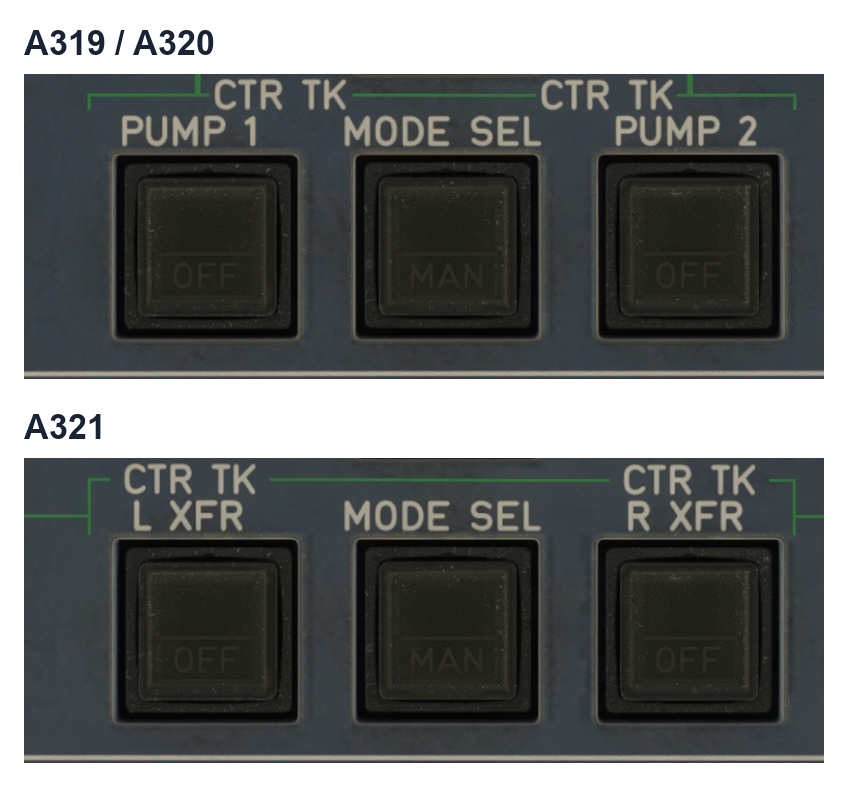
Original Fenix centre-tank controls, enlarged without changing their pixels: PUMP 1/2 on A319/A320; L XFR/R XFR on A321. [18, Illustrations in the family-differences article]