A FAMILY RESEMBLANCE, WITH DIFFERENCES THAT MATTER
The shorter A319 and longer A321 make the shared cockpit feel familiar, but the view through the windscreen does not tell you the whole story. Airframe geometry affects ground clearance, rotation and landing considerations, and loading affects acceleration. Rotation is the deliberate nose-up movement at takeoff; the flare is the small change of attitude near the runway during landing. The A321's longer fuselage deserves particular attention in both. When changing model, keep a familiar route if that helps, but prepare fresh loading and performance data for the aircraft you are actually flying. [10, introductory aircraft comparison] [13, PDF pp. 118–121,]
Some differences are visible before you enter the cockpit. Wingtip fences are the smaller wingtip devices shown in the family drawing; Sharklets are the taller swept devices. Either appearance needs to be matched to the actual aircraft option. Fenix also describes different A319 cabin densities and overwing-exit arrangements, an optional A321 two-class cabin and an A321 Noise Reduction Package with a modified exhaust. The airline paint scheme is a useful way to find your aircraft in a busy selection menu, but it does not establish every installed option. [10, What's Included?] [9, paragraphs on wingtip and cockpit-equipment changes]
The A321 can also have Additional Center Tanks, shortened to ACTs. These add a fuel-storage and transfer arrangement and occupy cargo space. Transfer means moving fuel between parts of the fuel system so it is available to the appropriate feed arrangement. We will look at the fuel page later; for now, recognise why extra tank capacity is more than a larger total printed on a plan. The A320 fuel controls are useful familiar landmarks, but the A321's transfer controls have their own job. [10, What's Included?] [9, paragraphs describing ACT installation and aft-cargo location]
For a first change of family member, make the comparison deliberately. Confirm the new model and engine, load it with its own planned masses, inspect its fuel display and controls, and prepare a new takeoff calculation. The common cockpit reduces the amount of new geography to learn. It should leave you more attention for the differences, rather than hide them. The family comparison retains the original Airbus contours, including the A319 drawing's explicitly optional second overwing exit. [10, introductory aircraft comparison] [13, PDF pp. 118–121,] [15, PDF p. 42]
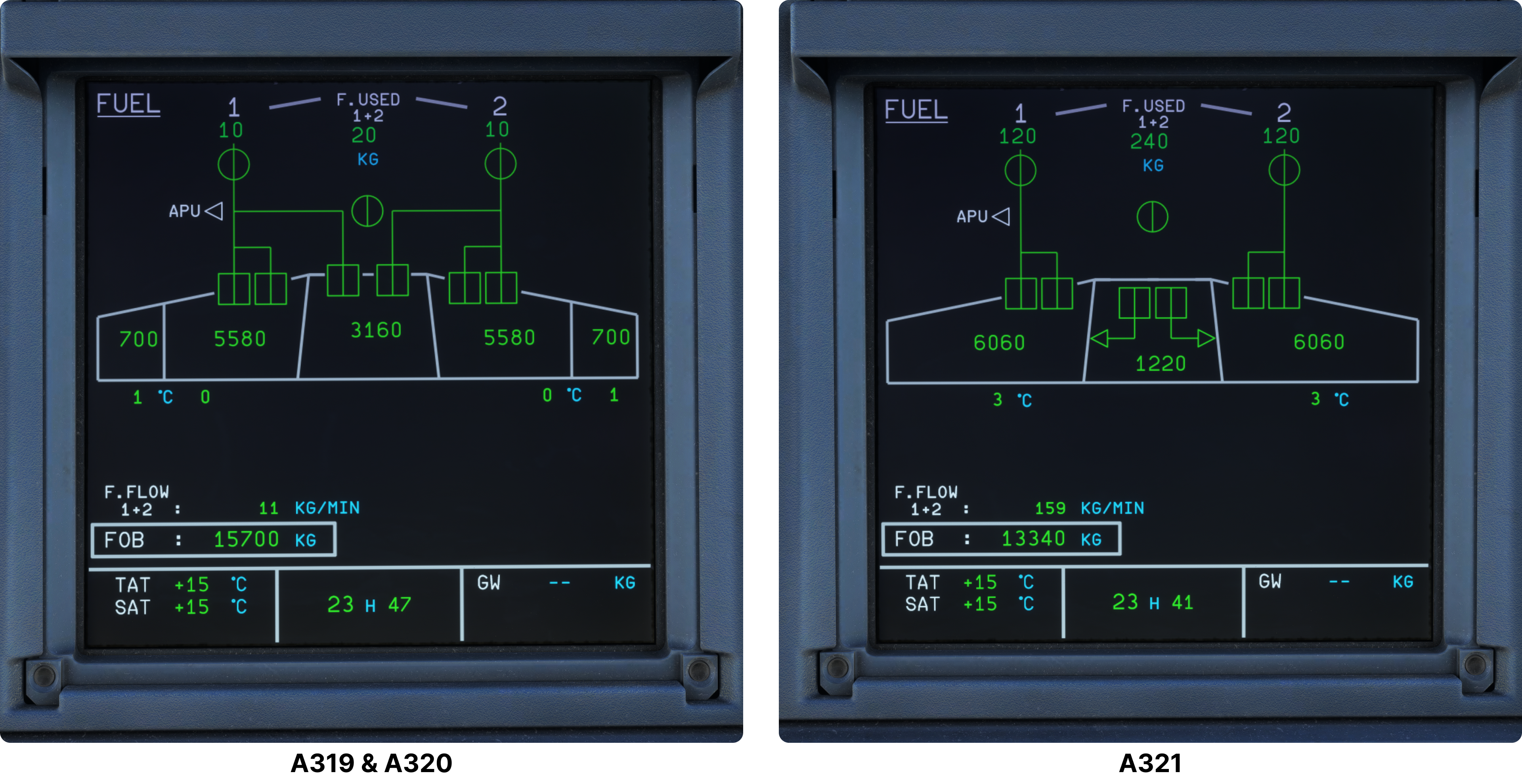
Original Fenix FUEL displays: A319/A320 left, A321 right. Inner/outer-wing and transfer arrangements differ; displayed quantities belong to the source examples. [18, Illustrations in the family-differences article]
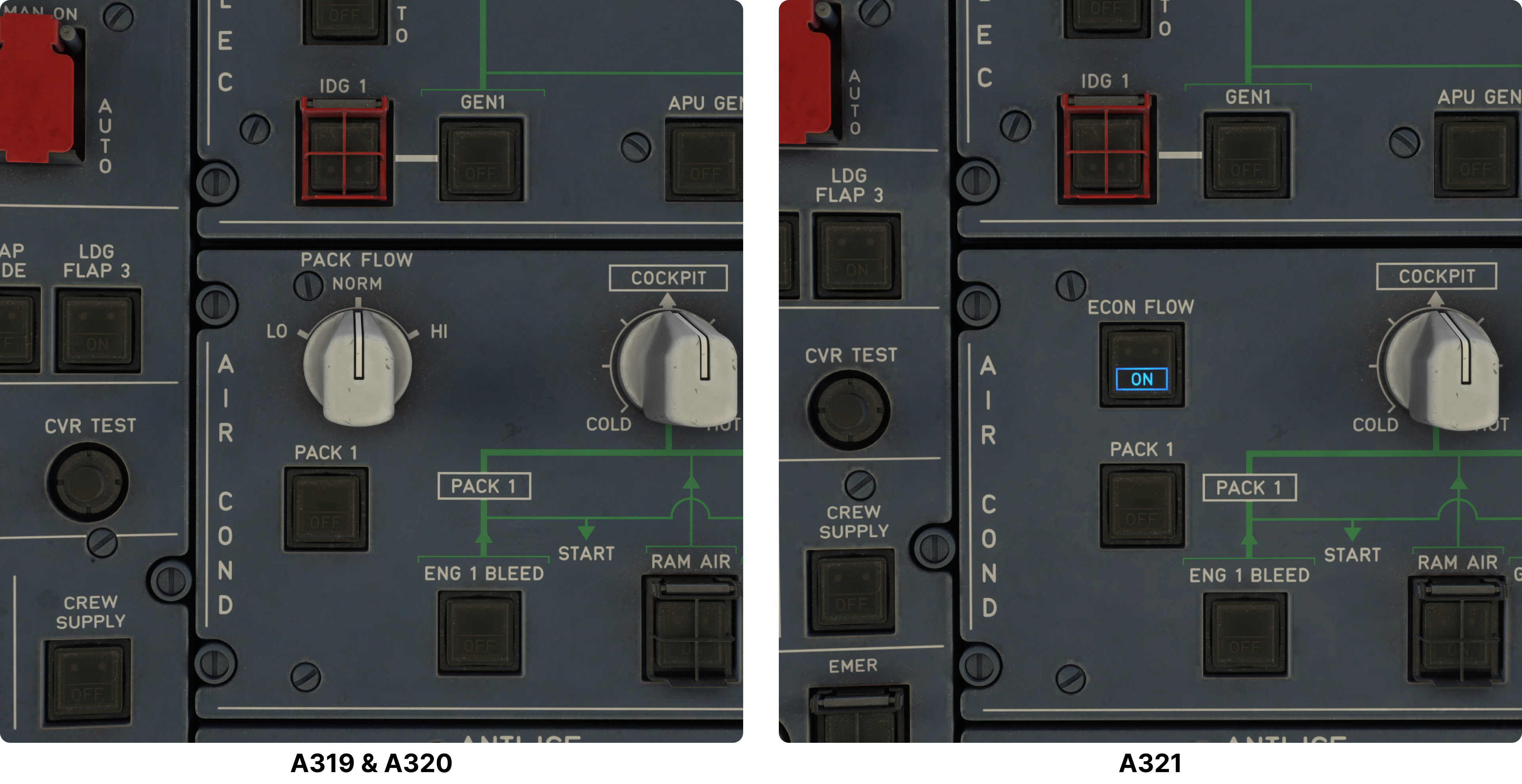
Original Fenix pack controls: A319/A320 PACK FLOW selector at left; A321 ECON FLOW pushbutton at right. [18, Illustrations in the family-differences article]
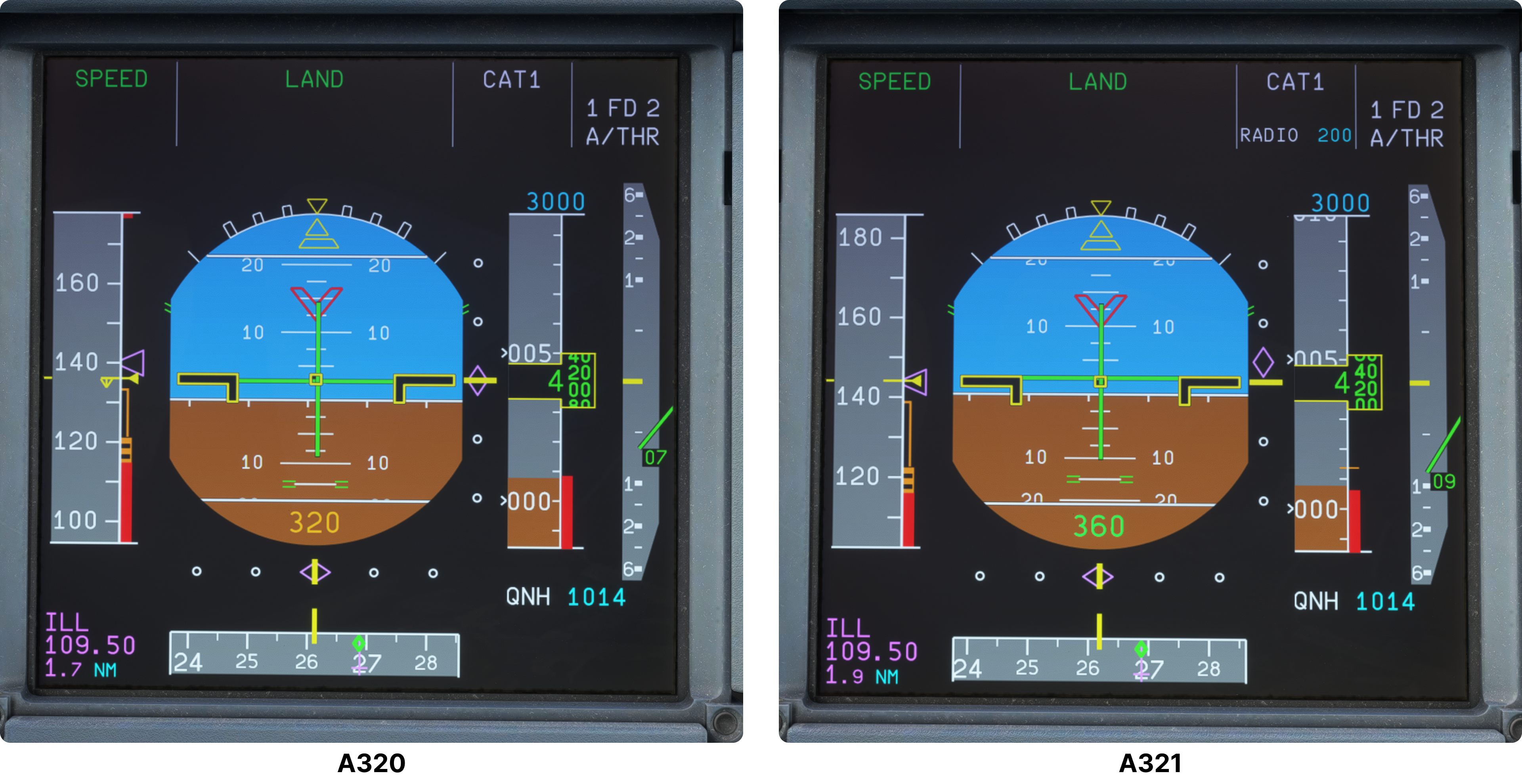
Fenix illustration of tail-strike pitch-limit indications. The source article states that the indicator is absent on A319 and differently positioned on A321. LAND is displayed in these source examples; the marks are not flare-attitude targets. [18, Illustrations in the family-differences article]