ICE PROTECTION: FIND OUT WHICH PART IS BEING PROTECTED
Ice protection is a group of systems. Engine and wing anti-ice use pneumatic heat, while windows and probes use electrical heating. The probes are the sensors that supply information such as air-pressure and temperature data. These protected areas have different supplies and controls, so selecting one system does not establish the state of all the others. When following the preparation, identify which part of the aircraft the control belongs to and read the associated indication. The word anti-ice on two neighbouring controls does not mean they are interchangeable. [37, PDF p. 2]
Pneumatic anti-ice uses air from the aircraft's air-supply system, so its selection also belongs in the performance picture. Before departure, the actual configuration, conditions and takeoff calculation need to agree. If a relevant configuration changes after you calculated the takeoff, revisit the affected data instead of assuming the previous result still applies. In flight, continue to monitor the selected state and indications as conditions and phases change. This connects a switch selection with both the equipment being protected and the assumptions behind the aircraft's planned performance. [37, PDF pp. 3–4] [34, PDF pp. 8–9]
There is another distinction on the ground. Airborne ice protection and the removal of ground contamination are separate tasks. Selecting wing anti-ice does not replace a ground deicing plan. A proper cold-weather exercise includes the aircraft's preparation, service coordination and timing for that operation. It should not become an otherwise unchanged departure with an extra switch selected. For an initial learning flight, understand the normal systems and the conditions you have loaded; return to a dedicated cold-weather exercise when you can give that whole process the attention it needs. [13, PDF pp. 277–278]
A useful review has three questions. Which area needs the protection required by the current conditions? Is its supply and selected state understood? Does the performance preparation still describe that configuration? The questions give the overhead labels a purpose and help prevent a vague assumption that the whole aircraft has been dealt with. Use the relevant current procedure for the actual conditions rather than importing a remembered temperature threshold or switch sequence from a different aircraft example. [37, PDF pp. 3–4] [34, PDF pp. 8–9]
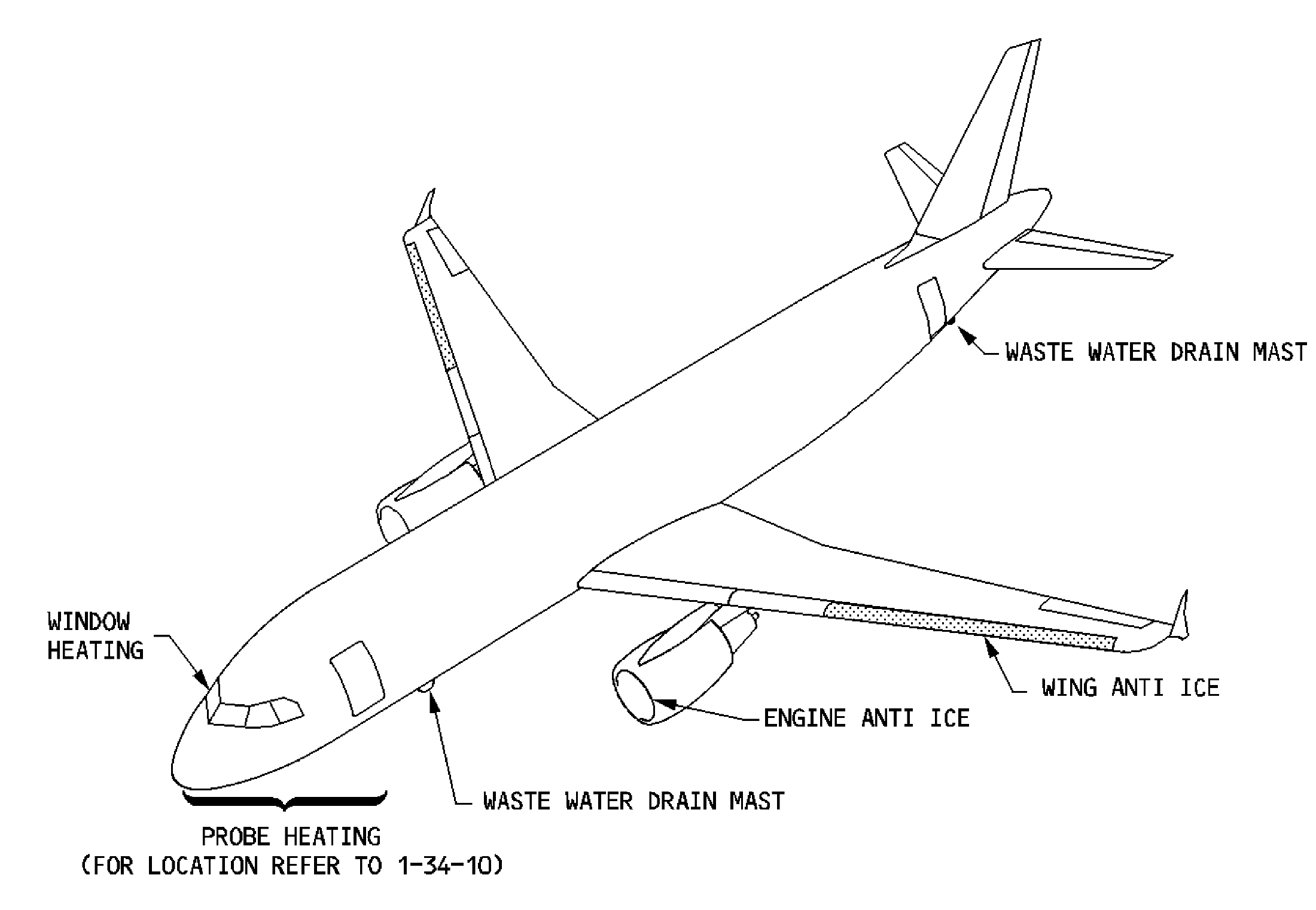
A320 wing, engine-inlet, window and probe protection locations. [37, PDF p. 2]