ROLLOUT: CONFIRM DECELERATION AND RETAIN CONTROL
On the runway, look for the stopping systems to produce the result we prepared. Confirm actual ground-spoiler deployment, select the appropriate reverse and monitor engine indications and deceleration. The spoilers reduce wing lift so the wheel brakes can work effectively; a selection or armed indication needs that observed result. The crosswind illustration shows a specific skid-recovery condition, including the recovery use of reverse and brakes. Read it with that condition in mind; routine rollout follows the normal stopping plan and the actual aircraft response. Continue watching how quickly the aircraft is slowing rather than relying on a reassuring panel selection. [13, PDF pp. 188-193]
Maintain directional control while reducing speed, managing reverse and braking for a suitable exit. The cited normal guidance makes an important distinction: once reverse has been selected, the landing is committed to a full stop. The airborne go-around prepared earlier belongs before that point. Keep attention on the runway path and the available stopping distance. If the aircraft is not slowing as expected, use the applicable response rather than waiting for the result to improve on its own. The performance preparation has established the intended landing; the rollout is where we confirm that the required deceleration is actually being achieved. [13, PDF pp. 188-193] [14, PDF p. 1153]
Choose an exit that the aircraft can negotiate safely at its present speed. A convenient taxiway is useful only when we can reach it under control. Continue until the whole aircraft is clear of the runway and relevant protected area before beginning the after-landing reconfiguration. The nose passing a line does not establish that the tail and wings are clear as well. Keep the outside scan going through the turn and onto the taxiway, then identify where the arrival clearance leads next. Heathrow's ground movement starts as the runway movement ends, and the next safe stop is still part of the flight. [14, PDF pp. 1159-1160] [13, PDF pp. 201-202]
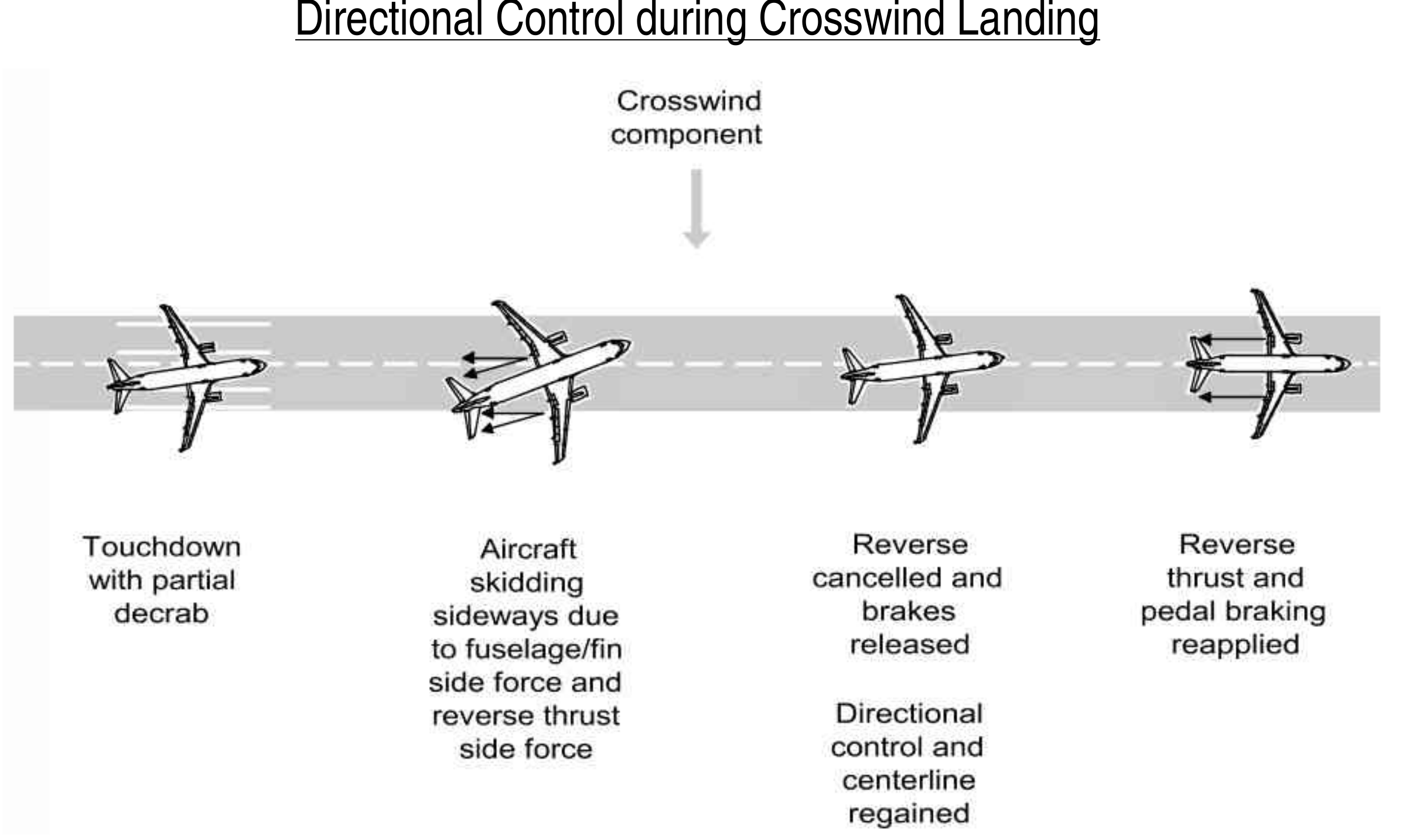
Original Airbus crosswind-skid recovery illustration after touchdown: reverse and brakes are released, directional control is regained, then reverse and braking are reapplied. This depicts the stated recovery condition. [13, PDF p. 192]
IN PRACTICE: Let the stopping plan do its work
Before you begin: The main gear has touched down and the levers are at IDLE. The landing-performance and braking/reverse plan are the ones briefed for this runway.
1. Confirm lift dumping
Action. Check the actual ground-spoiler deployment and the aircraft settling onto the runway.
Check. Ground lift is being removed so the wheel brakes can act effectively. [13, PDF pp. 188-193] [14, PDF pp. 1153-1154]
2. Select the briefed reverse thrust
Action. Deploy the reversers and use the planned reverse level while maintaining directional control. Once reverse has been selected, continue the full-stop landing.
Check. Reverse indication and engine response agree with the selection. The flight is now committed to the landing rollout under the normal guidance. [13, PDF pp. 188-193] [14, PDF p. 1153]
3. Check actual deceleration
Action. Monitor the selected autobrake or use the required manual braking. Compare the actual slowing with the stopping plan; a DECEL indication, where shown, refers to achieved deceleration.
Check. The aircraft is slowing sufficiently for the runway remaining, and braking is being assessed by its result. [13, PDF pp. 188-193] [14, PDF pp. 1153-1154]
4. Keep the pedals doing the high-speed steering
Action. Use the rudder pedals to maintain the runway centreline. Keep the tiller for taxi speed rather than using its high steering authority during the fast rollout.
Check. Directional control remains smooth while the balance between rudder and nosewheel steering changes with speed. [13, PDF pp. 188-193]
5. Reduce reverse and prepare to vacate
Action. Reduce reverse towards idle in the normal sequence and stow the reversers before leaving the runway. Take a suitable exit at a controllable speed.
Check. The reversers are stowed and the aircraft can turn off safely without a rushed attempt to make an unsuitable exit. [13, PDF pp. 188-193] [14, PDF pp. 1153-1154]
6. Clear the runway before reconfiguration
Action. Continue until the whole aircraft is beyond the runway holding-position boundary. Then begin the after-landing flow when the taxi workload allows it.
Check. The aircraft and its tail are clear of the runway before the crew becomes occupied with configuration changes. [14, PDF pp. 1159-1160] [13, PDF pp. 201-202]
Complete when: The aircraft is clear of the runway, at taxi speed, with reverse stowed and the after-landing phase ready to begin.