THRUST DETENTS, RATING AND AUTOTHRUST
The thrust levers have identifiable resting positions called detents. The relevant labels are IDLE, CL, FLX/MCT and TOGA. They help the crew select an important operating position positively rather than estimate it from lever angle. Read the labels on the actual quadrant and then verify the resulting engine rating and mode. The physical selection and the aircraft's response are two parts of the same check. [13, PDF pp. 51-64]
TOGA requests the takeoff/go-around regime. FLX is used for a valid calculated FLEX takeoff, while the same physical detent provides MCT, maximum continuous thrust, in the applicable operating situation. CL is the climb detent used in the normal climb/autothrust arrangement. These names describe operating requests; the accepted rating and indications confirm how the engine-control system has implemented them. [13, PDF pp. 51-64]
A/THR is autothrust. It can change actual engine thrust while the Airbus levers remain in place. That may seem odd if you expect an automatic system to move the handles in front of you. Here, the lever position defines the available range, and the active mode determines how that range is being used. The engine indications show the actual thrust response, so the handle alone cannot tell the whole story. [13, PDF pp. 51-64]
The FMA, Flight Mode Annunciator, is the mode strip at the top of the primary flight display. It tells us what the guidance and thrust system is doing. We will study its columns and mode changes in the next chapter. For now, connect the three observations: where the levers are, which mode is active, and what thrust the engines are actually producing. Each observation answers a slightly different question. [13, PDF pp. 51-64]
The FADEC and autothrust also have different jobs. The engine-control system manages the engine's permitted operation; autothrust supplies thrust requests according to the active guidance task. Before takeoff, the performance calculation, entered request, selected detent and accepted engine rating must agree. This is why the preparation includes both careful entry and a later display check when the thrust command is made. [11, Chapter FADEC]
V3's independent engine-control modelling makes the comparison across both engines particularly relevant. Watch the accepted rating and achieved indications rather than assuming a requested value has automatically become the same result on each side. The practical workshop keeps that distinction concrete. Understanding the chain from calculation to command to response makes the quadrant much easier to use than memorising lever positions on their own. [11, Chapter FADEC]
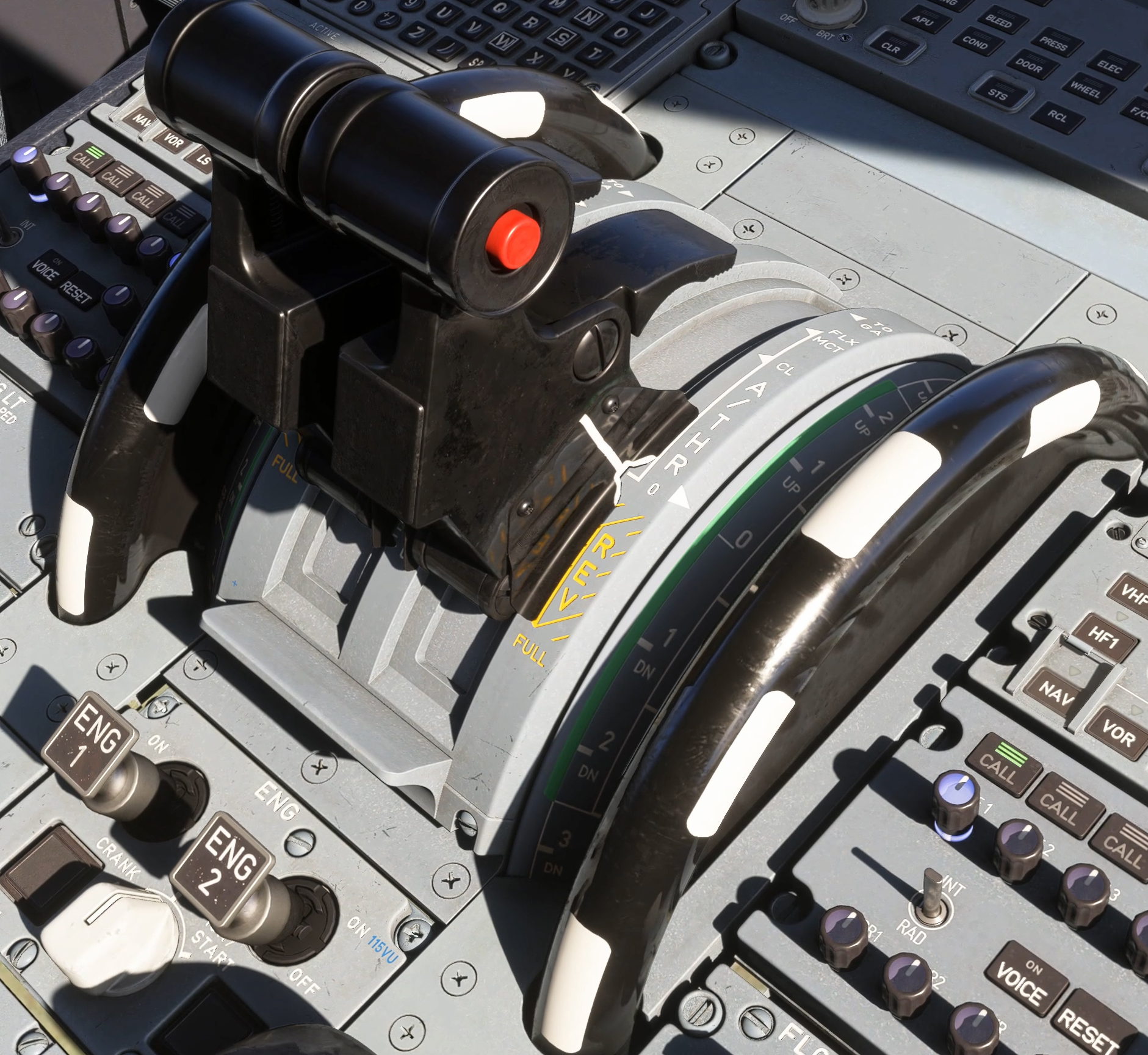
Original Fenix thrust quadrant and detent scale. The photograph identifies the hardware; use the detent requested by the current procedure. [1, Source illustration]
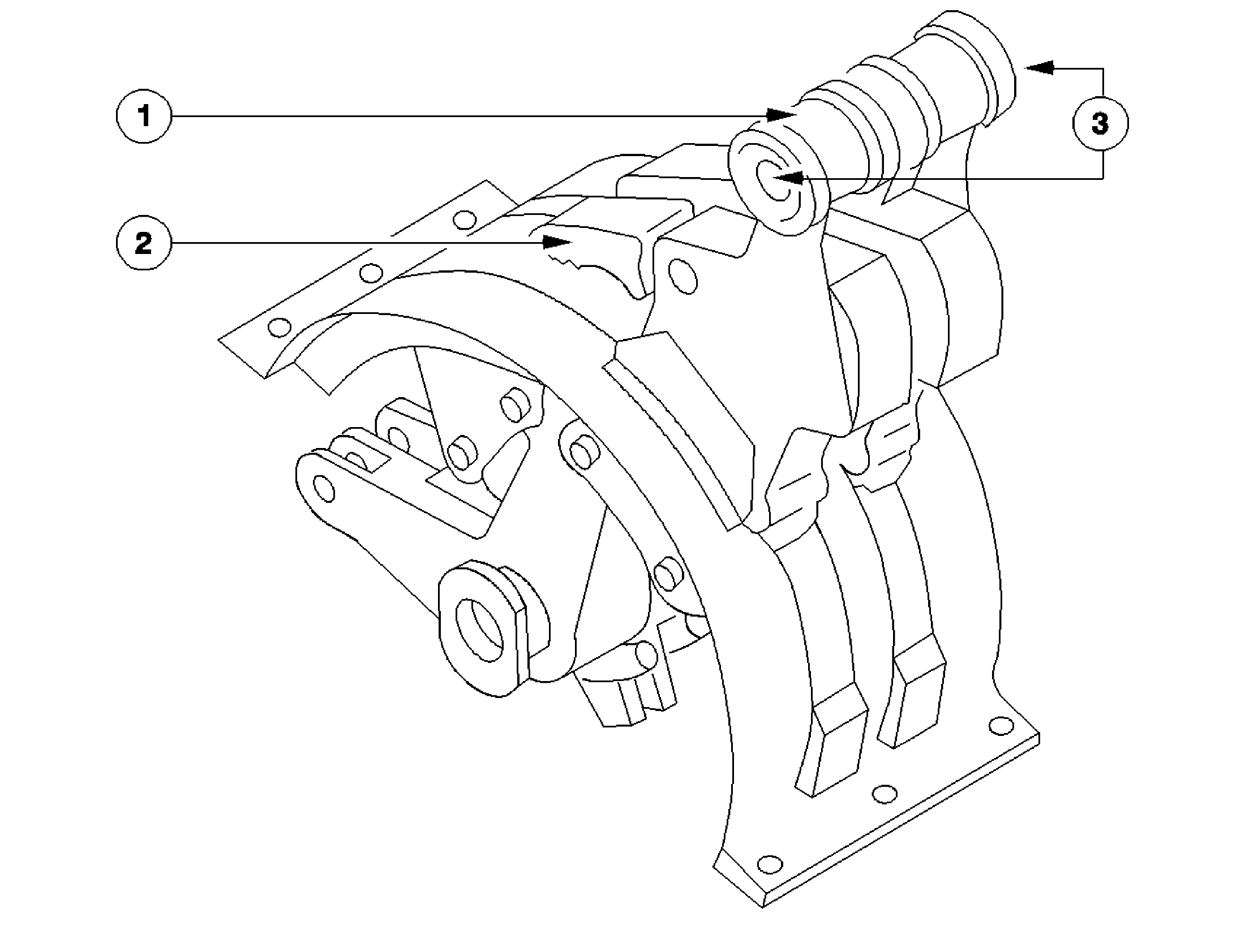
Original thrust-lever and reverse-lever hardware drawing. [12, PDF p. 36]