FIRE AND OXYGEN CHECKS: WATCH THE RESPONSE
The normal fire test lets you recognise the warning system's response during preparation. Use the designated TEST controls and observe the expected warning indications, sound and ECAM response, then release the control and check the post-test state. Identify the test control before using it. The guarded fire pushbuttons and extinguishing-agent controls have different purposes. A test is asking the detection and warning system to demonstrate its response; it is not a request to discharge an extinguishing agent. Taking a moment to see that distinction makes the fire panel much less mysterious. [38, PDF pp. 5–8] [14, PDF pp. 1016–1017]
The flight deck has a crew-oxygen supply, while the passengers have a separate oxygen system. During normal cockpit preparation, follow the installed crew-mask test and look for its required flow or test indications. Restore the equipment and stowage state correctly afterwards. Do not improvise a mask button from an illustration of a different unit, and do not use a passenger-mask deployment control as a substitute for testing crew equipment. The equipment fitted to the aircraft and its normal test instructions determine the action you perform. [39, PDF pp. 2–8]
Give each test enough attention to notice the result. Which warning appeared, which indication changed, and did the system return to its normal state afterwards? If one part of the expected response is missing or unexpected, investigate that difference before calling the test complete. It is tempting to click through checks as though dismissing notifications on a phone. Here, the response is the point of the exercise. On the next preparation, those lights and sounds will already mean something because you have watched them deliberately.
The workshop separates the engine fire circuits, the APU fire circuit and the normal oxygen check. For oxygen preparation it also asks you to confirm the supply state and the relevant crew-oxygen pressure indication against the applicable requirement. Keep the quantity/supply check and the mask test as distinct observations. One tells you about the available supply; the other checks the installed equipment's specified response. No new pressure limit or substitute mask-control sequence is needed to understand why both checks matter. [14, PDF pp. 989,1016–1017,1030–1031] [13, PDF pp. 92–93]
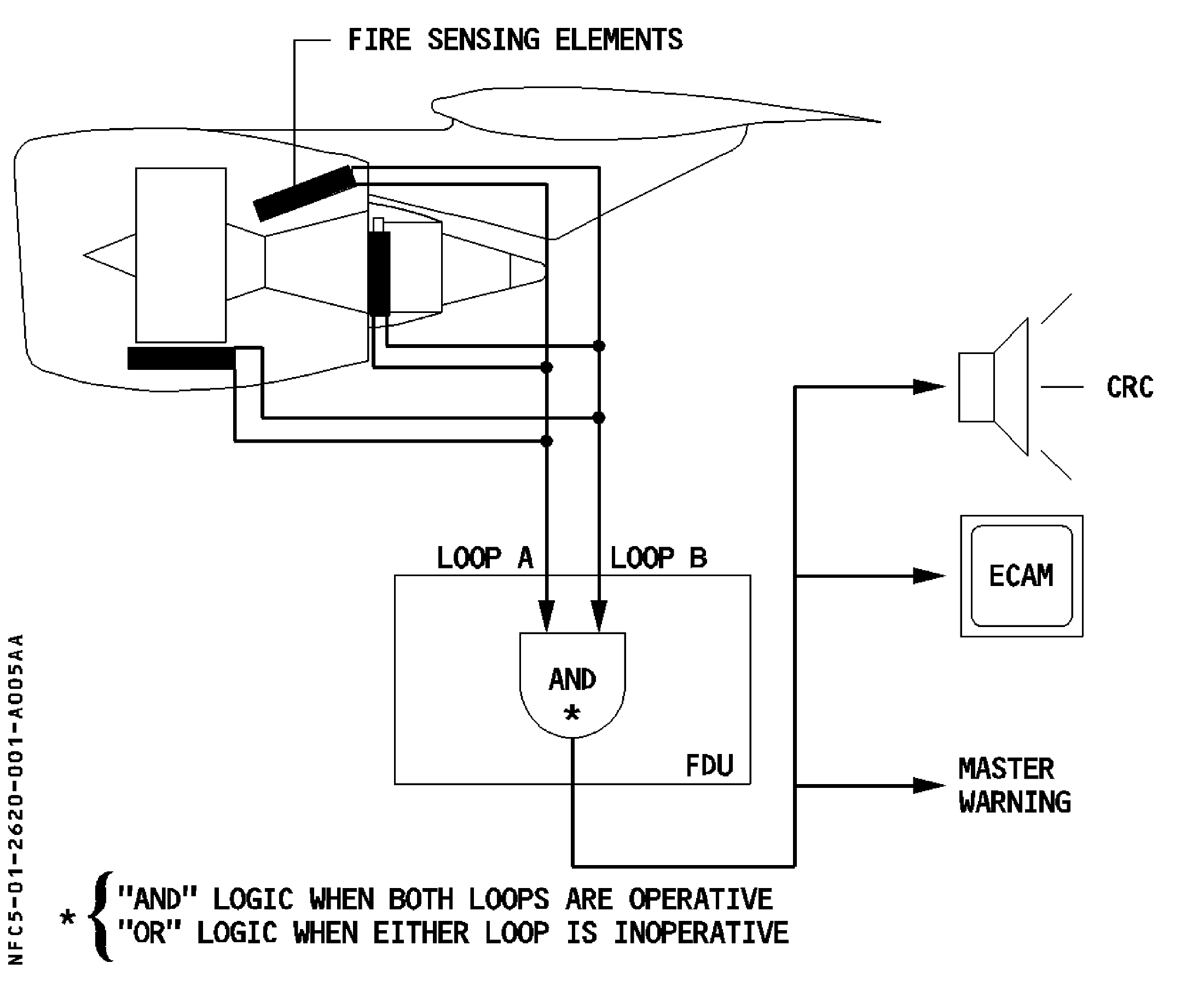
Engine fire-detection loops and the warning path. [38, PDF p. 3]
IN PRACTICE: Make the normal fire and oxygen tests diagnostic
Before you begin: Stable electrical power and the installed normal test instructions available. These are normal TEST controls, not fire-agent discharge or passenger-mask deployment commands. Match the instructions to the actual modeled unit.
1. Identify the controls and check oxygen supply
Action. Confirm the guarded fire controls in their normal positions and identify the actual TEST buttons. Check CREW SUPPLY and review crew-oxygen pressure on DOOR/OXY against the applicable current requirement.
Check. The test controls are distinguished from discharge/deployment controls, and the crew oxygen supply state is known. [14, PDF pp. 989,1016-1017,1030] [13, PDF pp. 92-93]
2. Test each engine fire circuit
Action. Press the ENG 1 TEST control and observe the corresponding ECAM fire warning, aural/master warning and fire-panel/engine FIRE indications, including SQUIB and DISCH test lights. Release, then perform the corresponding ENG 2 test.
Check. Each engine’s normal test produces its own expected indications. Check the panel’s normal state after release before moving on. [14, PDF pp. 1016-1017]
3. Test the APU fire circuit
Action. Press the APU FIRE TEST control and observe the APU FIRE warning, aural/master warning when AC power is available, red fire control and SQUIB/DISCH test indications. Release and verify the normal post-test state.
Check. The APU test has been checked separately from the engine tests and no agent-discharge control has been operated. [14, PDF p. 989]
4. Complete the installed normal oxygen test
Action. Use the normal mask-test procedure provided with the installed aircraft. Check its required flow and communication indications, then restore the mask and supply to the specified normal state.
Check. The oxygen-supply and mask-test checks are complete against the applicable procedure, with the equipment correctly stowed. [14, PDF pp. 1030–1031]
Complete when: The fire-test responses have been checked, oxygen supply verified and the installed normal mask test completed. Test controls are released and normal selections restored.