CABIN ALTITUDE: A DIFFERENT ALTITUDE FROM THE ONE YOU FLY
As the aircraft climbs, the outside air pressure falls. The pressurisation system manages the pressure inside the aircraft so the cabin environment changes on its own schedule. Cabin altitude expresses that inside pressure as an equivalent altitude. It is a way of describing the pressure people are experiencing, rather than the height of the cabin floor above the ground. The aircraft can be climbing while the cabin altitude changes more gently. Reading those two different altitudes as though they should match would make a normally working system look very strange. [29, PDF pp. 21–22]
The packs supply air; the outflow valve controls how air leaves the pressurised aircraft. The cabin-pressure controllers use that arrangement to manage the pressure. Air conditioning and pressurisation therefore depend on related supplies while controlling different things. Asking for a cooler cabin temperature does not directly request a different cabin altitude. If the pressure information seems unexpected, include the available air supply and the pressure-control state in your inspection. Adjusting a temperature selector will not explain what the outflow valve and pressure controller are doing. [29, PDF pp. 21–22]
Read three indications together on ECAM PRESS. Cabin altitude describes the pressure condition now. Cabin vertical speed describes how quickly that equivalent altitude is changing. Differential pressure describes the difference between the pressure inside and outside; it is a pressure difference, not another rate of climb. During climb, cruise and descent, compare them with the phase of flight and the automatic setup. Also check that the landing-elevation reference belongs to the intended destination after the flight has been initialised. That reference helps connect the cabin's pressure schedule with the airport you plan to reach. [29, PDF pp. 17–18]
Our first exercise begins with the normal automatic preparation. Recognise the CABIN PRESS controls and LDG ELEV AUTO, then confirm the landing-elevation information on the receiving display. LDG ELEV means landing elevation, the airport-height reference, rather than a request to move the aircraft's landing gear. Later in the flight, revisit PRESS and follow the trend. This is a reading exercise: establish what the automatic system is doing before considering any change. The Frankfurt–Heathrow example uses normal-altitude airports and introduces no high-altitude procedure. [29, PDF pp. 21–22] [14, PDF pp. 1014,1020]
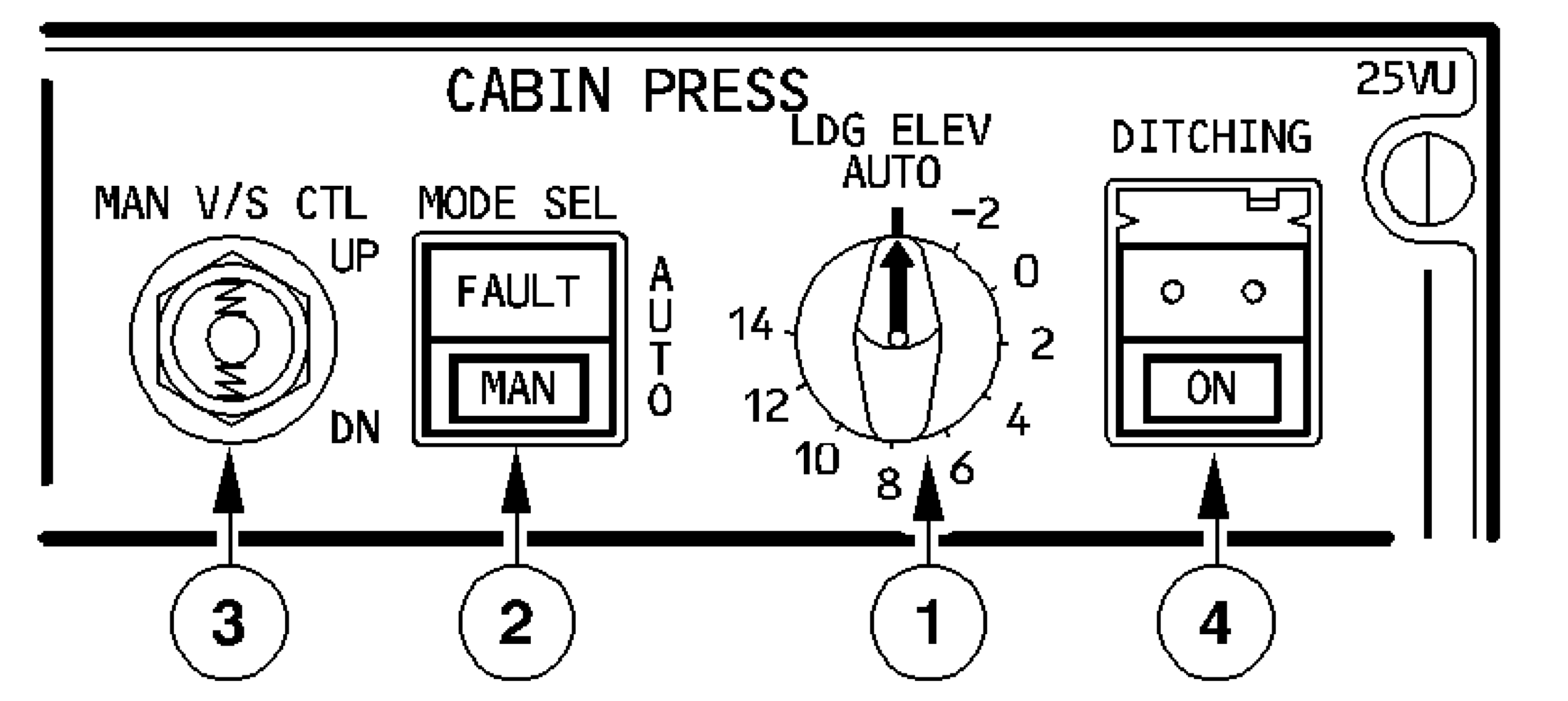
Cabin-pressure control panel, with LDG ELEV selector and AUTO/MAN mode selection. [29, PDF p. 28]
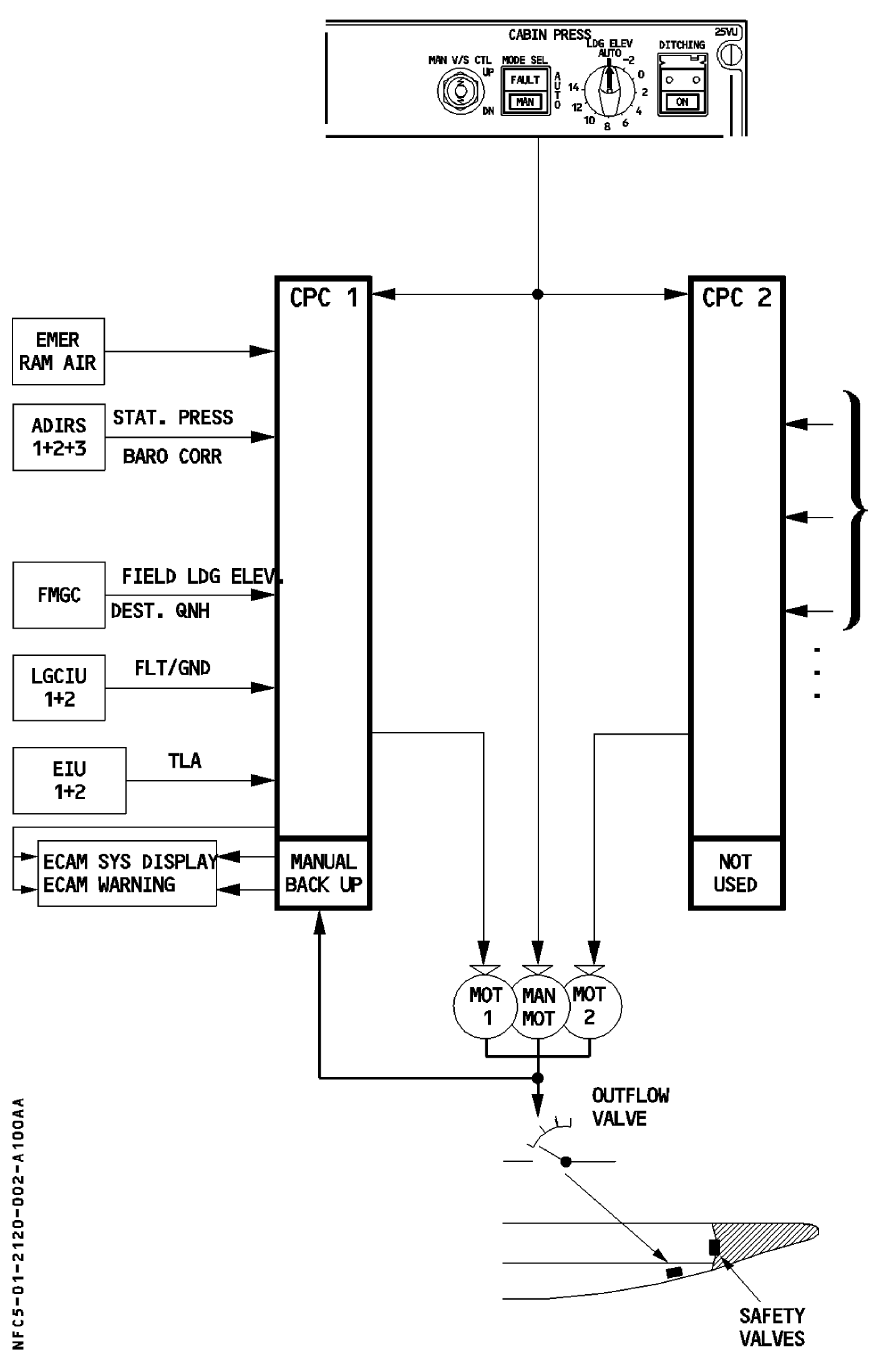
Cabin-pressure controllers, inputs and outflow-valve control. [29, PDF p. 22]
IN PRACTICE: Read pressurisation before changing anything
Before you begin: Normal automatic pressurisation preparation. The worked flight has normal-altitude airports; no high-altitude procedure is being introduced. Continue the trend-reading portion during the subsequent flight.
1. Check the automatic setup
Action. Review the CABIN PRESS controls and normal automatic selection. Check LDG ELEV AUTO, then call the ECAM PRESS page and confirm the automatic landing-elevation reference.
Check. The indication agrees with the intended automatic setup. A selector position has been confirmed on the receiving display. [29, PDF pp. 21-22] [14, PDF pp. 1014,1020]
2. Identify the three different measurements
Action. Read cabin altitude, cabin vertical speed and differential pressure on PRESS. Relate them to the current ground/flight state; a near-unpressurised ground condition should be interpreted against ambient pressure.
Check. Cabin altitude has not been confused with the aircraft’s indicated altitude, and cabin rate has not been confused with aircraft vertical speed. [29, PDF pp. 21-22]
3. Check the destination reference after initialization
Action. Once the destination is initialized, verify that the automatic landing-elevation information is consistent with the intended arrival. Revisit it after a relevant destination/arrival change.
Check. The controller’s landing reference belongs to the flight being prepared rather than an earlier destination. [29, PDF pp. 21-22] [14, PDF pp. 1082-1084]
4. Follow the trend during the flight
Action. During climb, cruise and descent, include PRESS in the system review. Compare cabin altitude, rate, differential pressure and valve indication as a group; use the applicable procedure for any abnormal state.
Check. Normal pressure control is monitored through a coherent trend. This reading exercise has not become an improvised manual-outflow-valve procedure. [29, PDF pp. 21-22] [14, PDF pp. 1074-1077] [14, PDF pp. 1085-1090]
Complete when: Automatic selection and landing-elevation reference are checked, and cabin altitude, cabin rate and differential pressure can be interpreted as distinct measurements.