THRUST DETENTS, RATING AND AUTOTHRUST
The relevant detents are IDLE, CL, FLX/MCT and TOGA. TOGA requests the takeoff/go-around regime; FLX applies to a valid calculated FLEX takeoff, while the same lever position provides MCT in the applicable situation. CL is used for the normal climb/autothrust arrangement. Select the required detent positively and verify the resulting rating and mode. [13, PDF pp. 51-64]
With A/THR active, actual thrust can change while the levers remain stationary. Lever position establishes the available range and the active mode determines how that range is being used. Monitor thrust through the engine indications and FMA, including after a mode or target change. [13, PDF pp. 51-64]
Before takeoff, reconcile the requested detent, accepted rating and FMA. V3's independent engine-control modelling makes the distinction between requested and accepted thrust particularly relevant. The performance calculation, the entered request and the engine's response need to agree. [11, Chapter FADEC]
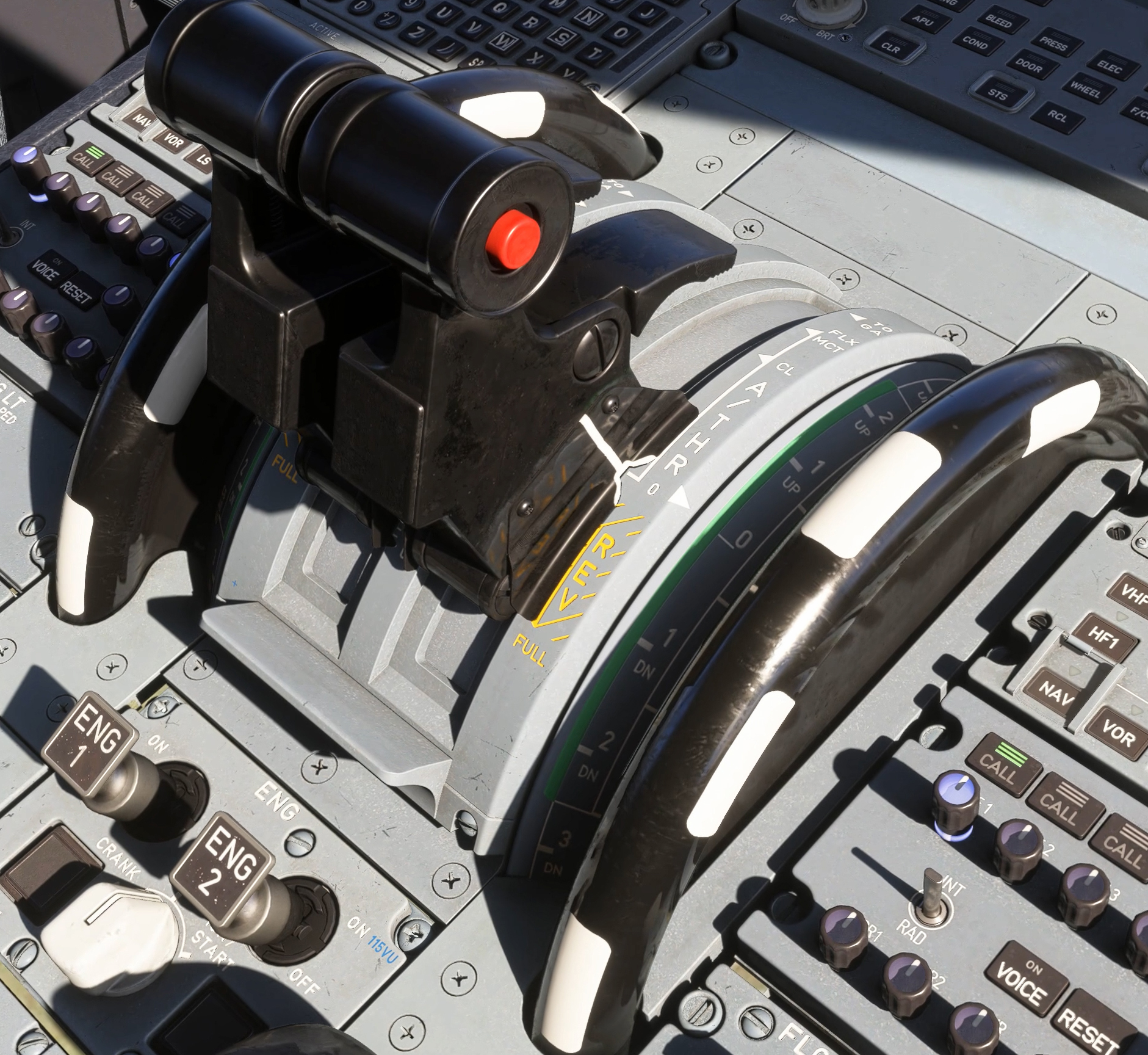
Original Fenix thrust quadrant and detent scale. The photograph identifies the hardware; use the detent requested by the current procedure. [1, Source illustration]
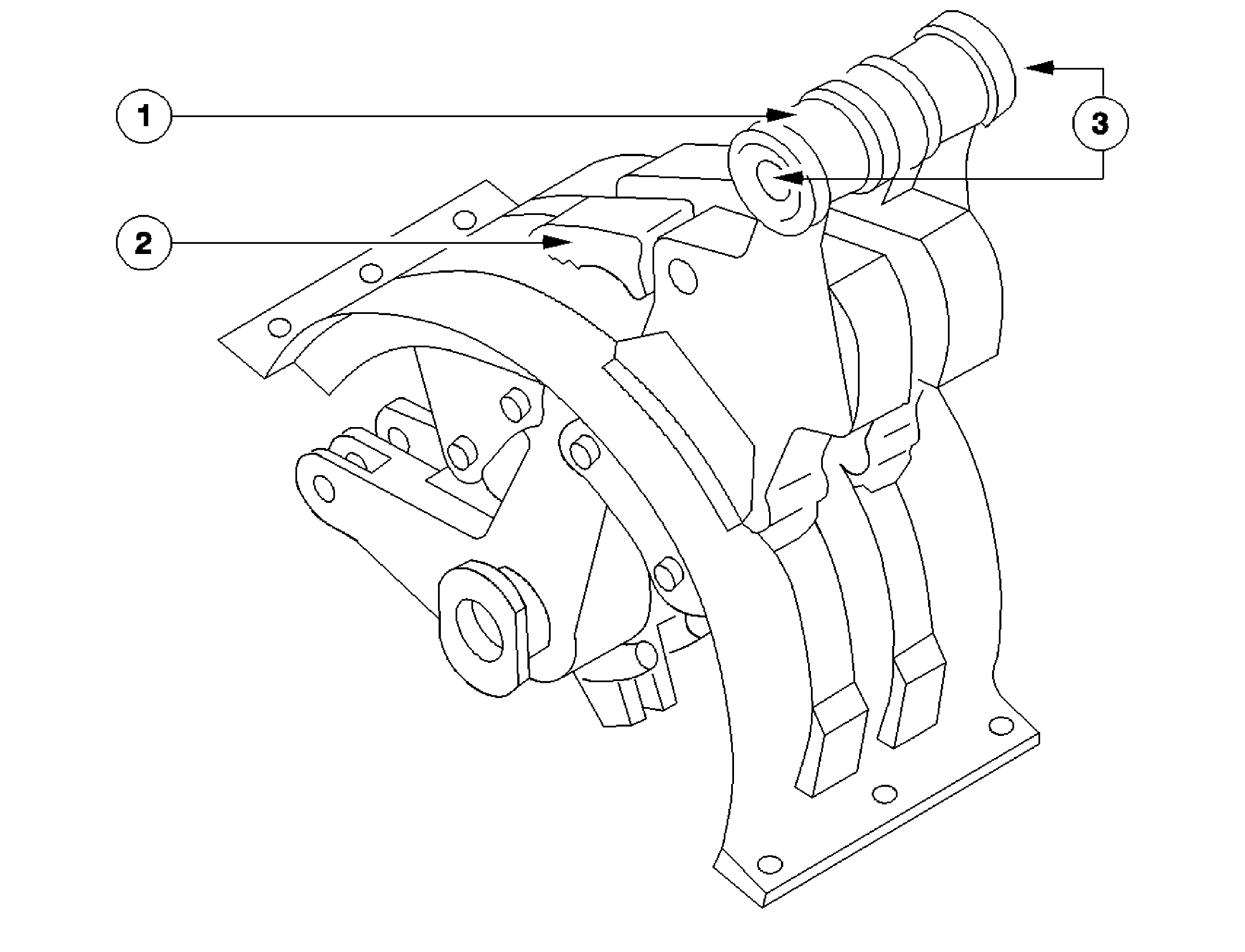
Original thrust-lever and reverse-lever hardware drawing. [12, PDF p. 36]