ENGINE START: FOLLOW THE SEQUENCE TO STABLE IDLE
Select IGN/START and the intended ENG MASTER in accordance with the start procedure. Monitor the engine display for starter operation and increasing N2. The command and the first physical response are separate observations; establish that the expected sequence has begun before moving attention to the next event. [28, PDF pp. 4-5] [13, PDF pp. 103-106]
Follow fuel flow, ignition and EGT rise together with developing N1, N2 and oil indications. Each parameter describes a different part of the start. Read the trend across them: rotation established, combustion developing and the engine progressing towards stable operation. [28, PDF pp. 4-5]
Confirm starter cutout and stable idle using the loaded engine's procedure and limits, then start the other engine while continuing to monitor both. Return the selector to NORM when appropriate and complete after-start work. An unexpected temperature or acceleration trend requires the applicable procedure; a single reassuring indication does not establish a normal start. [14, PDF pp. 1039-1047] [14, PDF pp. 1048-1050]
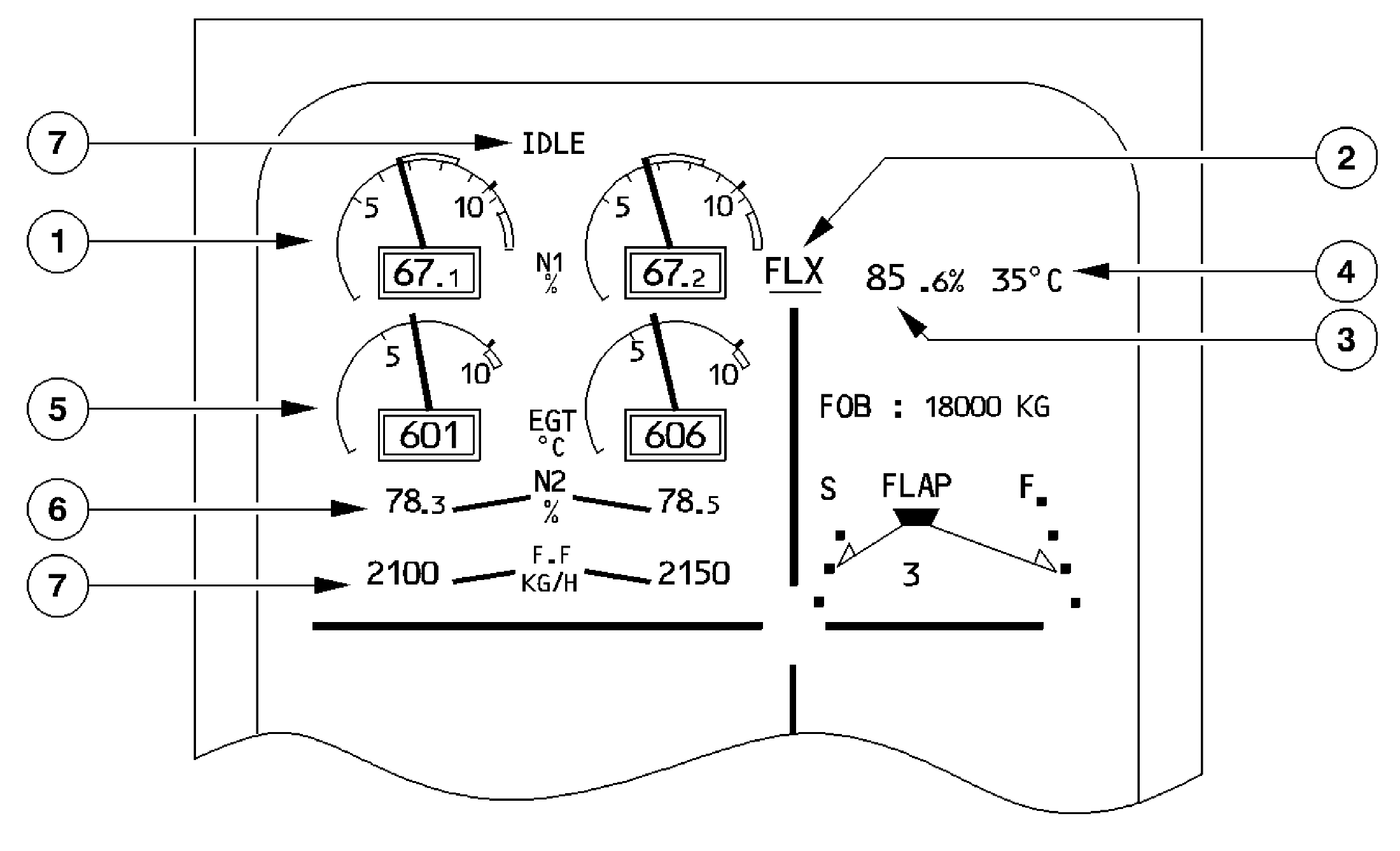
CFM primary-parameter layout: N1, EGT, N2 and fuel flow. Original composite training schematic; its figures are not a coherent normal-idle snapshot or operating targets. [12, PDF p. 40]
IN PRACTICE: Start engine 2, then recognise a completed start
Before you begin: The Before Start preparation is complete, APU bleed pressure is available, thrust levers are at IDLE and the normal automatic-start method is being used.
1. Select the starting mode
Action. Turn the ENG MODE selector to IGN/START and observe the engine display before operating a master switch.
Check. The start-related indications are available. This mode selection prepares the control system; it has not yet commanded an engine to run. [13, PDF pp. 103-106] [14, PDF pp. 1039-1047]
2. Request engine 2
Action. Set ENG MASTER 2 to ON. Follow engine 2 on the display; leave the other engine for its own start after this one is established.
Check. The start valve opens and N2 begins to rise as the starter turns the high-pressure spool. [13, PDF pp. 103-106] [14, PDF pp. 1039-1047]
3. Follow the sequence, not just one number
Action. Watch the ignition indication, fuel flow and EGT response as N2 continues to increase. Include N1 and the oil-pressure rise in the scan.
Check. Rotation is followed by fuel and ignition, then a temperature response and increasing fan speed. The indications form a plausible start sequence. [13, PDF pp. 103-106]
4. Recognise the handover from starter to engine
Action. Continue watching until the start-valve and ignition indications complete their normal sequence and the engine settles at idle or displays AVAIL. Compare the stabilised parameters instead of using elapsed time as the completion test.
Check. The engine has become self-sustaining and the starter is no longer driving it. The indications are stable enough to begin the second start. [13, PDF pp. 103-106] [14, PDF pp. 1039-1047]
5. Repeat the observation for engine 1
Action. Set ENG MASTER 1 to ON and repeat the same N2, ignition, fuel, EGT, N1 and oil-pressure scan on engine 1.
Check. The second engine completes its own start. Similar master-switch actions have been followed by two separately monitored results. [13, PDF pp. 103-106] [14, PDF pp. 1039-1047]
6. Read both engines together
Action. When both are stable, compare the two columns, including the relative vibration indications. Finish the engine-start check before changing to after-start tasks.
Check. Both engines show a normal, stabilised operating picture. An unexplained disagreement has not been hidden by concentrating on the second start alone. [13, PDF pp. 103-106] [14, PDF pp. 1039-1047]
Complete when: Both engines are stable and the automatic-start sequence is complete. Continue with the normal after-start flow; an unsuccessful start belongs to the indicated ECAM procedure, not to an improvised repeat of this exercise.